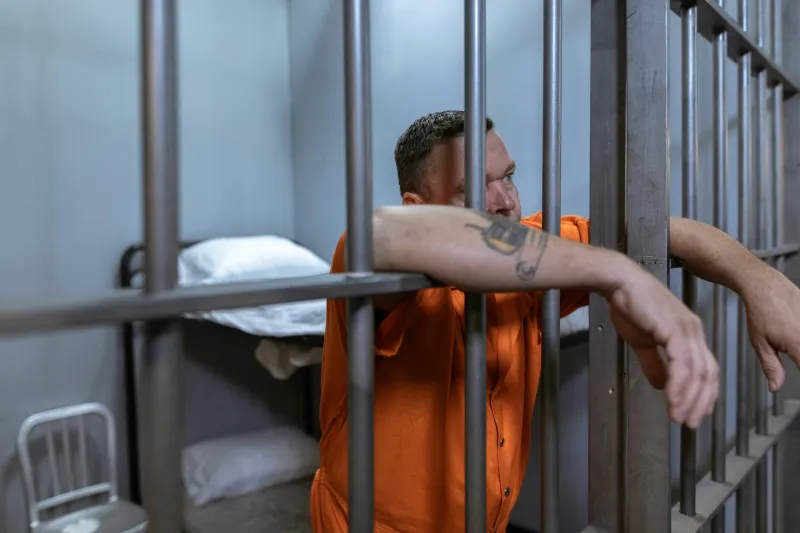
In the small town of Susanville, California, population 15,000, the closure of two federal prisons in 2021 sent shockwaves through the local economy. Nearly 1,000 jobs vanished overnight, devastating a community that had built its entire economic foundation on incarceration. Local officials scrambled to find new uses for the massive concrete facilities, but the damage was done—Susanville's story illustrates a troubling reality across rural America, where hundreds of communities have become economically dependent on keeping human beings locked in cages.
The Architecture of Dependency
This dependency didn't emerge by accident. Beginning in the 1980s, as deindustrialization hollowed out rural manufacturing and mining jobs, federal and state governments deliberately marketed prison construction as economic development. The Rural Prison Strategy, championed by politicians across party lines, promised struggling communities a recession-proof industry with guaranteed employment and steady tax revenue.
The numbers tell a stark story: between 1980 and 2010, the rural prison population grew by 427%, compared to 206% in urban areas. Today, over 60% of America's prisons sit in rural counties, despite these areas housing just 20% of the population. States like Louisiana, Mississippi, and Oklahoma built entire correctional economies, with some counties deriving up to 40% of their employment from incarceration-related jobs.
This wasn't just about jobs—it was about capturing bodies for economic gain. Rural communities received federal funding based on prison populations counted in the census, artificially inflating their political representation and resource allocation. Meanwhile, the predominantly urban communities where incarcerated people actually lived lost both political power and federal dollars, creating a perverse redistribution of wealth and influence.
The Human Cost of Economic Incentives
When your town's economic survival depends on maintaining high incarceration rates, criminal justice reform becomes an existential threat. Local officials, prison guards, and business owners who supply correctional facilities develop a vested interest in tough-on-crime policies, longer sentences, and recidivism. The result is a powerful political constituency that lobbies against rehabilitation programs, sentencing reform, and alternatives to incarceration.
This dynamic particularly harms Black and Latino communities, who are disproportionately incarcerated and then shipped hundreds of miles from their families to fill rural prison beds. A 2019 study by the Prison Policy Initiative found that 60% of people in state prisons are held more than 100 miles from their communities, making family visits prohibitively expensive and undermining the social connections crucial for successful reentry.
The economic incentives are brutally clear: every person who successfully reintegrates into society represents lost revenue for prison towns. Every program that reduces recidivism threatens local employment. Every reform that shortens sentences potentially closes facilities and devastates local economies.
Breaking the Cycle Requires Honest Reckoning
Critics argue that prison-dependent communities simply need to "adapt" to changing economic realities, but this perspective ignores how federal policy created this dependency in the first place. Rural America didn't choose mass incarceration—it was sold mass incarceration as the solution to economic abandonment. After decades of factory closures, mine shutdowns, and agricultural consolidation, prison construction often represented the only significant federal investment these communities had seen.
The path forward requires acknowledging this history while refusing to accept its continuation. Just as the federal government invested billions in prison construction, it must now invest in genuine economic development that doesn't require human suffering. The FIRST STEP Act's modest reforms saved taxpayers $400 million annually while reducing recidivism, proving that smart justice policy and fiscal responsibility align.
Several states are pioneering alternatives. Colorado converted the closed Rifle Correctional Center into a marijuana cultivation facility, creating comparable employment without the moral compromise. New York's closure of several upstate prisons was accompanied by targeted economic development funds for affected communities, though advocates argue the investments remain insufficient.
The False Choice Between Justice and Jobs
Defenders of the prison economy often frame this as a choice between criminal justice reform and rural economic survival. This framing obscures the real choice: between perpetuating a system that profits from human misery and building an economy based on human dignity and genuine productivity.
The current system fails everyone except private prison corporations and their shareholders. Rural communities remain economically vulnerable, dependent on an industry that could disappear with changing political winds or budget constraints. Meanwhile, mass incarceration devastates urban communities, breaks up families, and perpetuates cycles of poverty and trauma that ultimately make everyone less safe.
A just transition away from carceral dependency would include federal investment in renewable energy, broadband infrastructure, and advanced manufacturing in rural areas. It would provide retraining and pension protections for correctional workers while creating pathways to careers in education, healthcare, and environmental restoration. Most importantly, it would recognize that sustainable economic development cannot be built on the systematic dehumanization of fellow Americans.
Toward a Politics of Collective Liberation
The prison economy represents everything wrong with American capitalism: the commodification of human suffering, the racialization of economic exploitation, and the false scarcity that pits working communities against each other. Breaking this cycle requires more than policy reform—it demands a fundamental shift toward an economy that values human flourishing over profit extraction.
Rural America deserves better than an economy built on cages, and Black and brown communities deserve better than serving as the raw material for rural economic development. The choice isn't between justice and jobs—it's between a society organized around punishment and one organized around healing, between an economy that profits from desperation and one that invests in human potential.
Until we confront the economic incentives that make mass incarceration profitable for some communities, we'll never achieve the criminal justice reform that both justice and fiscal responsibility demand.