The Algorithm of Exploitation
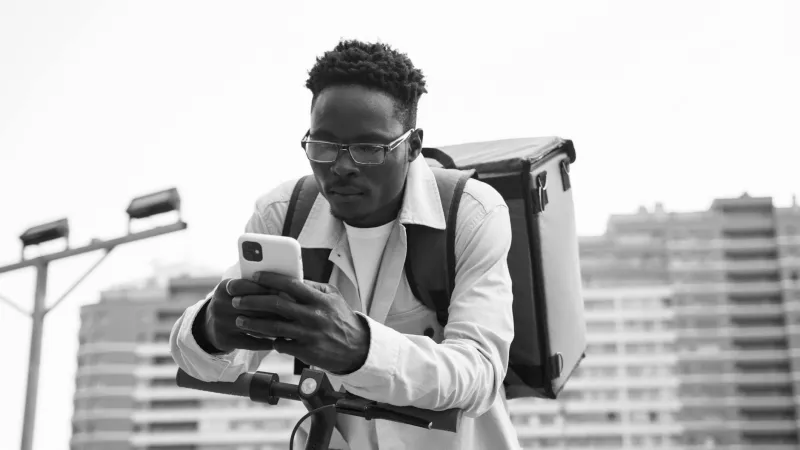
Across America, millions of workers wake up each day to drive for Uber, deliver for DoorDash, or shop for Instacart — yet according to their employers, they're not employees at all. They're "independent contractors," a legal fiction that has allowed Silicon Valley's gig economy giants to build some of the most valuable companies in history while systematically denying workers the basic protections that define employment in the 21st century.
This isn't an oversight or an unintended consequence. It's the foundational business model of the gig economy: take jobs that would traditionally be done by employees, rebrand them as "entrepreneurial opportunities," and pocket the difference between what these companies would pay in wages and benefits versus what they actually spend on their misclassified workforce.
The numbers tell the story of a massive wealth transfer from workers to shareholders. The Economic Policy Institute estimates that misclassifying employees as independent contractors costs workers $4.2 billion annually in unpaid overtime alone. Add in the missing health insurance, paid sick leave, unemployment benefits, and workers' compensation, and the figure balloons into the tens of billions — money that flows directly to company coffers while taxpayers pick up the tab through Medicaid, food stamps, and emergency room visits.
The Prop 22 Playbook: Buying Your Own Rules
When California passed Assembly Bill 5 in 2019, requiring companies to prove that gig workers were truly independent contractors under a strict three-part test, the response from Big Tech was swift and unprecedented. Uber, Lyft, DoorDash, and Instacart spent over $200 million — the most expensive ballot measure campaign in California history — to pass Proposition 22, which carved out a special exemption allowing them to continue misclassifying drivers while offering minimal concessions that fell far short of employee benefits.
The campaign was a masterclass in corporate propaganda. Voters were bombarded with ads featuring diverse drivers talking about "flexibility" and "being my own boss" — messages crafted by the same PR firms that once sold cigarettes as healthy and climate denial as scientific debate. The companies threatened to leave California entirely if forced to follow the same labor laws as every other employer, a threat that revealed just how dependent their profit margins are on worker exploitation.
Prop 22's passage wasn't just a California story — it was a beta test for a nationwide strategy. Similar measures have been pushed in other states, while the companies have simultaneously lobbied Congress for federal legislation that would enshrine their preferred classification rules into national law. The message is clear: if you won't let us exploit workers under existing law, we'll simply buy new laws.
The Hidden Subsidy: When Taxpayers Fund Corporate Profits
The gig economy's misclassification model represents one of the largest corporate subsidies in modern American history — and it's one that doesn't appear in any budget. When Uber and Lyft drivers lack health insurance, they turn to Medicaid. When DoorDash delivery workers can't afford groceries on their fluctuating income, they rely on SNAP benefits. When an Instacart shopper gets injured on the job without workers' compensation, they end up in emergency rooms where unpaid bills get absorbed by hospitals and passed on to other patients.
A 2020 study by the UC Berkeley Labor Center found that California's gig workers received $413 million in public assistance annually — effectively a taxpayer subsidy to companies valued in the hundreds of billions. Nationally, the figure is certainly much higher, representing a massive transfer of costs from profitable corporations to struggling public budgets.
This dynamic is particularly perverse given that many gig workers are people of color, immigrants, and others who already face systemic barriers to economic mobility. The companies market gig work as an escape from traditional employment constraints, but the reality is often a trap: workers drawn in by promises of flexibility find themselves working longer hours for less money, with none of the protections that generations of labor organizers fought to establish.
The Department of Labor's Moment
The Biden administration has signaled its intention to crack down on worker misclassification, with the Department of Labor proposing rules that would make it harder for companies to claim workers as independent contractors. The proposed rule would return to a more traditional "economic reality" test, examining factors like the degree of control exercised by the employer and whether the work is integral to the business.
But the gig companies aren't waiting passively. They've already begun restructuring their operations to comply with new rules while maintaining their exploitative model — offering limited benefits that cost less than full employment protections, or creating complex subcontracting arrangements designed to muddy the legal waters. The fight over classification rules has become an arms race between corporate lawyers and labor regulators, with workers caught in the middle.
Beyond the Algorithm: Reimagining Work
The stakes in this battle extend far beyond the gig economy itself. If companies can successfully argue that controlling workers through algorithms rather than direct supervision makes them independent contractors, the implications ripple across every industry. Amazon's delivery network, increasingly reliant on "delivery service partners" who employ drivers under gig-like conditions, represents just one example of how the misclassification model could metastasize throughout the economy.
Meanwhile, genuine innovation in work arrangements — true flexibility that doesn't come at the cost of basic protections — remains possible. Some European cities have experimented with platform cooperatives, where workers own and control their digital tools. Others have implemented "portable benefits" systems that attach protections to workers rather than jobs, allowing for flexibility without exploitation.
The choice facing America isn't between innovation and regulation — it's between an economy that works for everyone and one that enriches tech billionaires while socializing the costs. The gig economy's dirty secret isn't really a secret at all: it's a deliberate strategy to privatize profits while publicizing the human costs, wrapped in the language of disruption and entrepreneurship.
Every time a gig worker drives home after a 12-hour day without health insurance, every time a delivery driver's car breaks down without workers' compensation to cover lost wages, every time a family relies on food stamps to supplement gig work income, taxpayers are subsidizing Silicon Valley's business model — and it's time to send them the bill.