Governing by Countdown: How the Shutdown Deadline Became America's Real Legislative Process
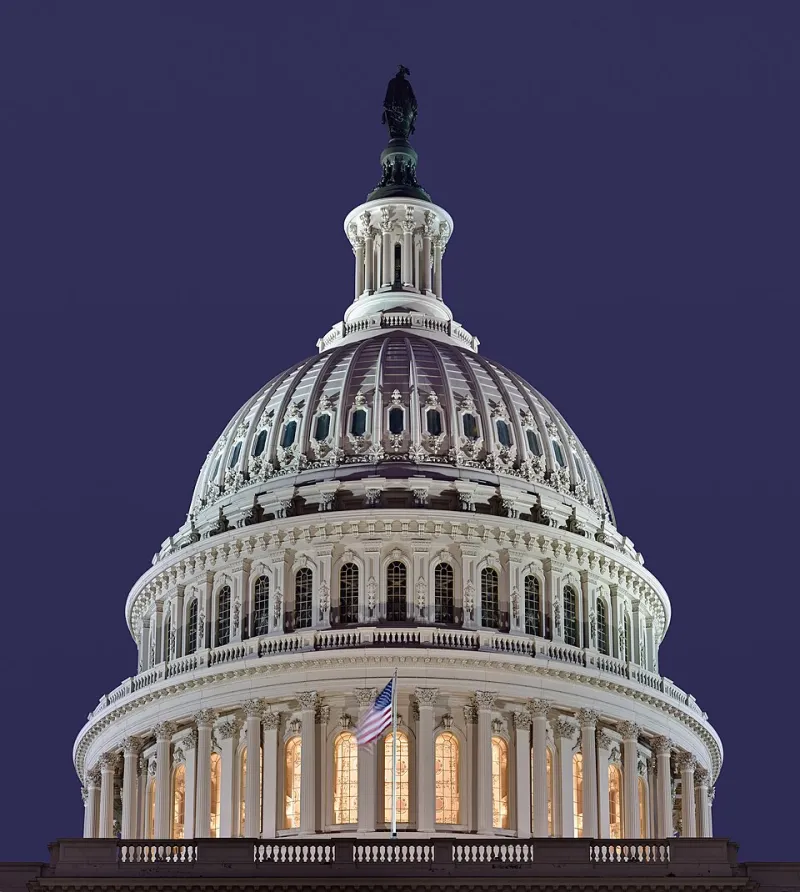
Photo: Diliff, CC BY 2.5, via Wikimedia Commons
Once again, the federal government approached a funding cliff with no completed appropriations bills in sight, and once again, Congress reached for the tool it has come to rely on more than any other: the short-term continuing resolution. These stopgap measures — which simply extend prior funding levels for days or weeks at a time — have become so routine that the regular order of budgeting, with committee hearings, amendments, and full debate, now exists more as a civics-textbook memory than a live practice.
The pattern is well documented. Congress has passed some form of continuing resolution in most fiscal years since the 1980s, and there have been multiple years in which not a single standalone appropriations bill was enacted on time. Shutdowns themselves — in 2013, and the record 35-day partial shutdown that stretched from December 2018 into January 2019 — are the extreme end of a spectrum of dysfunction that most years manifests as two-week deadlines, late-night votes, and last-minute scrambles.
What Deadline Governance Actually Does
The consequences are not evenly distributed. When funding decisions are compressed into a midnight countdown, the process rewards those with the least to lose and the most leverage. Agencies cannot plan. Federal contractors face furloughs. The 2019 shutdown alone, according to the Congressional Budget Office, reduced real GDP by an estimated $11 billion — roughly $3 billion of it permanently lost — and left some 800,000 federal workers missing paychecks, many of them living paycheck to paycheck.
For progressives, the deeper problem is structural. Big, transformative priorities — childcare investment, housing production, climate resilience, public health infrastructure — require multi-year planning and stable, predictable funding. A government that operates on rolling two-week extensions cannot commit to any of them. Meanwhile, defense and other politically protected accounts tend to be exempted or shielded in these deals, while discretionary programs serving low-income families absorb the uncertainty. Crisis budgeting is not neutral: it systematically advantages the already-protected and disadvantages the already-fragile.
It also concentrates power in ways the framers would not recognize. Under regular order, individual members and committees shape spending through amendment and negotiation. Under deadline governance, power flows to the Speaker, the Senate majority leader, and a handful of negotiators — with rank-and-file members reduced to voting yes or risking a shutdown they will be blamed for. Whoever holds the gavel during the crisis holds the pen.
The Reform Menu — and Its Limits
A serious set of fixes has circulated for years, and none is a magic bullet. Biennial budgeting — passing two-year budgets in even-numbered years — would cut the number of cliff-edge confrontations in half and give agencies genuine planning horizons. Critics reasonably counter that it could reduce congressional oversight of a fast-changing economy, and there is something to that; a two-year appropriation written in 2025 might miss an emergency in 2026. The answer is a two-year base with an annual review process for genuine changes, not blind autopilot.
Automatic continuing resolutions — the mechanism adopted in 2011 in a bipartisan Senate compromise and revived in more recent proposals — would keep the government funded at current levels if appropriations fail, removing the shutdown threat entirely. The strongest objection is that an automatic CR removes the one moment of leverage that forces negotiation, potentially entrenching whatever spending levels happen to exist. That is a real trade-off, and it deserves an honest answer: the leverage currently being exercised is producing shutdowns, not budgets. A threat that harms the public more than it moves the negotiators is not leverage worth protecting.
Other reforms — biennial CR triggers that step funding down incrementally to punish inaction, enforcement of the Congressional Budget Act's deadlines, and restoring the pre-1974 practice of stronger committee autonomy — all point in the same direction: rebuild a process where deliberation, not brinkmanship, decides outcomes.
Who Pays for the Dysfunction
The people who pay are the ones with the least buffer. Federal employees — roughly a third of whom are veterans — missed mortgages and put off medical care during past shutdowns. WIC nutrition programs, Head Start slots, and food inspection services have all wobbled during funding gaps. Small businesses near national parks and federal facilities lose revenue that never comes back. These are not abstractions; they are the operating costs of a governing style that treats the public's basic services as bargaining chips.
There is also a democratic cost. Every shutdown standoff teaches voters that Congress cannot do its most basic job, feeding the cynicism that erodes turnout and trust. A legislature that cannot pass a budget cannot credibly claim to be a check on anyone.
The verdict is unavoidable: a nation this wealthy deserves a government that budgets with intention rather than lurches from deadline to deadline — and restoring regular order is not a procedural nicety, it is a precondition for every progressive priority on the books.