The Medicaid Work Requirement Lie: How a Policy Dressed as Empowerment Is Just Another Way to Strip Healthcare from the Poor

The Trump administration is dusting off one of its most pernicious policy weapons from the first term: Medicaid work requirements. Dressed in the language of empowerment and self-sufficiency, these rules mandate that low-income Americans prove they're working, training, or volunteering for at least 20 hours per week to maintain their healthcare coverage. It sounds reasonable enough — until you examine what actually happened when states tried it.
The Arkansas Experiment: A Preview of Devastation
Arkansas became the laboratory for this cruel experiment in 2018, implementing the nation's first Medicaid work requirement. The results were as predictable as they were devastating. Within six months, more than 18,000 people lost their coverage — a staggering 25% of those subject to the new rules. Employment rates among the affected population didn't budge.
The bureaucratic maze was designed to fail. Recipients had to report their work hours through an online portal that was only accessible during business hours — the exact times when low-wage workers are typically on the job. No smartphone? No internet access? No coverage. Miss a single month of reporting, even if you're working full-time? You're out, and you can't reapply until the next year.
This wasn't an accident. Internal documents later revealed that state officials knew the reporting system would be nearly impossible for many recipients to navigate. That was the point.
The Employment Myth Exposed
Proponents claim work requirements will move people from dependency to self-sufficiency. The evidence tells a different story. A Kaiser Family Foundation analysis of Arkansas's program found that 95% of those who lost coverage were already working, caregiving for family members, or dealing with illness or disability that made employment difficult.
The fundamental premise is built on a lie. Most able-bodied Medicaid recipients already work. According to the Center on Budget and Policy Priorities, 78% of non-elderly, non-disabled Medicaid adults live in families with at least one worker. They're concentrated in industries that don't offer health insurance: retail, food service, home healthcare, and seasonal agriculture.
These aren't people choosing welfare over work. They're the working poor, trapped in jobs that pay too little to afford private insurance but too much to qualify for other safety net programs. Medicaid is often the only thing standing between them and medical bankruptcy.
The Real Target: Shrinking the Safety Net
Work requirements aren't about employment — they're about enrollment reduction. The cruelty is the point, as conservative policy architect Paul Weyrich once admitted: "I don't want everybody to vote. Elections are not won by a majority of people. They never have been from the beginning of our country."
The same logic applies here. Conservative policymakers don't want everyone to have healthcare. They want to make accessing public benefits so onerous, so humiliating, and so bureaucratically complex that people give up trying. Each person who loses coverage is a victory for deficit hawks who see human suffering as an acceptable price for smaller government.
Consider the broader context. States implementing work requirements have simultaneously refused to expand Medicaid under the Affordable Care Act, leaving millions in coverage gaps. They've underfunded their public health departments, closed rural hospitals, and gutted mental health services. The pattern is clear: create crises, then use those crises to justify further cuts.
Human Cost in Real Numbers
Behind every statistic is a human being. Take Sarah, a single mother in Arkansas who lost coverage when she couldn't report her work hours online. She was working two part-time jobs — neither offering health benefits — and caring for her diabetic daughter. When she missed her insulin doses to save money, she ended up in the emergency room with diabetic ketoacidosis. The hospital bill exceeded her annual income.
Or consider James, a construction worker whose hours varied seasonally. He met the work requirement during busy months but fell short during winter slowdowns. When he lost coverage, a workplace injury left him with a $47,000 bill and no way to pay. He declared bankruptcy and lost his home.
These aren't isolated cases. They're the predictable outcomes of a policy designed to punish poverty rather than address its root causes.
The Broader Political Strategy
Work requirements fit into a larger conservative project of dismantling the New Deal consensus that government has a role in ensuring basic human welfare. By attaching moral judgments to public benefits — deserving versus undeserving poor — they're recreating the conditions that made poverty a death sentence before the social safety net existed.
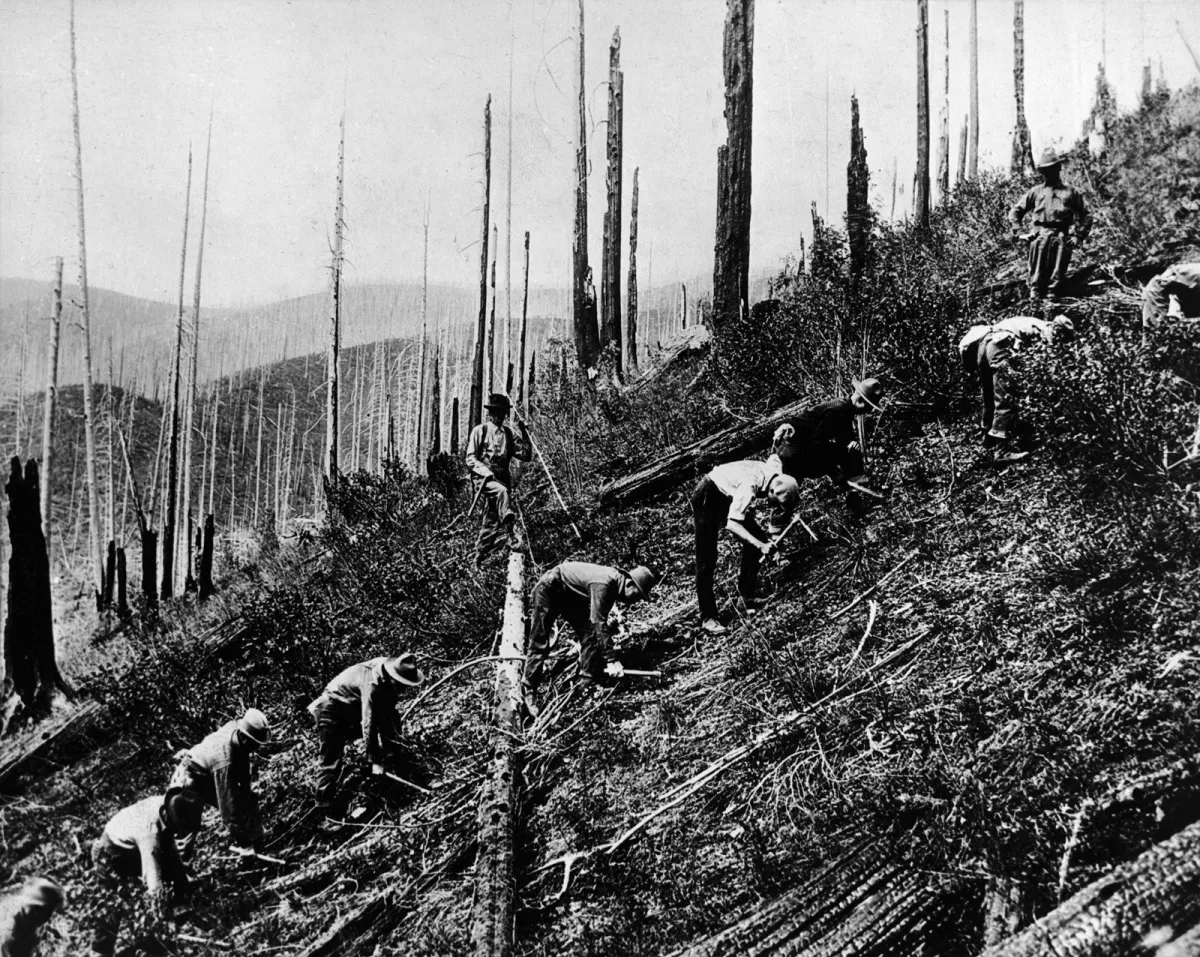 Photo: New Deal, via cdn.britannica.com
This strategy has deep historical roots. The same arguments were used against Social Security, Medicare, unemployment insurance, and food stamps. Each time, conservatives warned that helping people would make them lazy and dependent. Each time, they were proven wrong. Social Security didn't create a nation of idle retirees. Medicare didn't make seniors stop working. Food stamps didn't create a permanent underclass.
The Path Forward
The evidence is overwhelming: Medicaid work requirements don't work. They don't increase employment, they don't improve health outcomes, and they don't save money when you account for increased emergency room visits and administrative costs. They do exactly what they're designed to do: strip healthcare from vulnerable people.
The real solution to poverty isn't making poor people jump through more hoops. It's raising wages, expanding healthcare access, investing in education and job training, and building an economy that works for everyone, not just the wealthy.
As states line up to resurrect these failed policies, Americans must see them for what they are: not compassionate conservatism, but calculated cruelty designed to protect the privileged by punishing the poor.