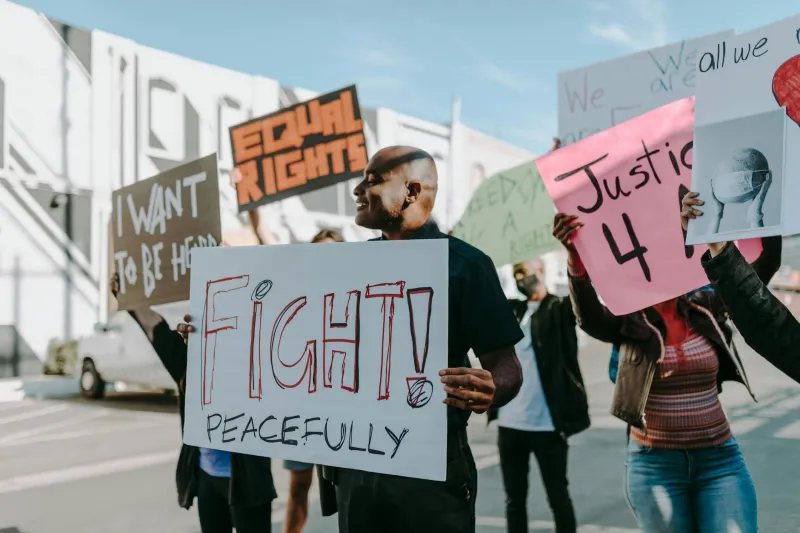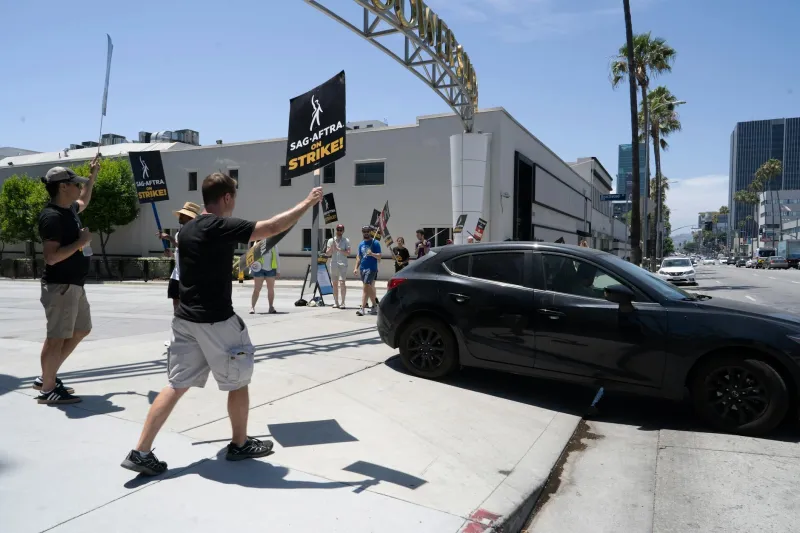
The Numbers Don't Lie: A Manufactured Crisis
In 1954, nearly 35% of American workers belonged to a union. Today, that figure hovers around 10%, with private sector unionization at a devastating 6%. This isn't the story of inevitable economic evolution—it's the result of a coordinated, decades-long assault on worker power that has fundamentally reshaped American capitalism.
While corporate executives saw their compensation increase by 1,322% since 1978, typical worker pay rose just 18%. The correlation isn't coincidental. As union density declined, so did workers' ability to bargain for their fair share of the prosperity they create. The middle class didn't hollow out by accident; it was systematically dismantled through policy choices that prioritized capital over labor.
The Legal Architecture of Union Busting
The foundation for labor's decline was laid with the Taft-Hartley Act of 1947, which allowed states to pass "right-to-work" laws—a deliberately misleading term for legislation designed to defund unions by allowing workers to benefit from collective bargaining without contributing to its costs. Twenty-eight states now have these laws, creating a race to the bottom that has suppressed wages even in traditionally pro-union regions.
The judicial assault intensified with the Supreme Court's 2018 Janus v. AFSCME decision, which extended right-to-work principles to public sector unions nationwide. This ruling, backed by corporate-funded legal groups, stripped millions of teachers, firefighters, and public servants of their collective bargaining power. The result? Public sector union membership has plummeted, weakening the last bastion of organized labor in America.
Meanwhile, the National Labor Relations Act remains deliberately toothless. When employers fire workers for organizing—which happens in 41.5% of union campaigns according to the Economic Policy Institute—the maximum penalty is back pay, often delivered years later. It's a cost of doing business that corporations gladly accept to maintain control over their workforce.
The Human Cost of Deunionization
The decline of organized labor hasn't just hurt union members—it's devastated working families across the board. Research by economists David Card and Thomas Lemieux found that deunionization accounts for 15-20% of the growth in wage inequality among men and 5% among women since the 1970s.
Consider the stark regional differences. In heavily unionized states like New York and California, median household incomes exceed $70,000. In right-to-work states like Mississippi and Arkansas, they barely crack $45,000. The correlation extends beyond wages to workplace safety, benefits, and job security. Union workers are 23% more likely to have employer-provided health insurance and 54% more likely to have employer-provided pensions.
For communities of color, the impact is particularly severe. Historically, unions provided one of the few pathways to middle-class stability for Black and Latino workers facing employment discrimination. The collapse of manufacturing unions coincided with the elimination of millions of well-paying jobs that didn't require college degrees, contributing directly to growing racial wealth gaps.
Corporate Power Fills the Vacuum
As worker power declined, corporate influence exploded. The same business groups that funded anti-union campaigns poured millions into political lobbying, regulatory capture, and tax avoidance schemes. Without organized labor as a counterbalance, policy-making shifted dramatically toward capital interests.
The result is an economy where productivity has increased 69.6% since 1979, but hourly compensation for typical workers has grown only 11.9%. That surplus didn't disappear—it flowed upward to shareholders and executives, facilitated by weakened worker bargaining power.
Corporate apologists argue that unions are obsolete in a globalized economy, that they stifle innovation and competitiveness. This narrative crumbles under international comparison. Germany maintains strong unions and robust manufacturing. Nordic countries combine high unionization rates with some of the world's most competitive economies. The difference isn't economic necessity—it's political choice.
The Path Forward: Rebuilding Worker Power
Reviving American unionism requires confronting the legal and political structures that enabled its decline. The PRO Act, which passed the House in 2021 but stalled in the Senate, would restore workers' right to organize by overriding state right-to-work laws, allowing workers to engage in solidarity strikes, and imposing real penalties on employers who retaliate against organizers.
Beyond federal legislation, the labor movement is adapting to modern realities. The successful organizing drives at Amazon warehouses, Starbucks stores, and Apple retail locations demonstrate that worker solidarity transcends traditional industrial boundaries. These campaigns combine traditional organizing with social media mobilization and community support that makes union-busting more difficult.
State and local governments are also stepping up. Cities like Seattle and states like California have strengthened workers' rights to organize, while others have expanded collective bargaining to previously excluded workers like domestic workers and farmhands.
Democracy Requires Worker Power
The stakes extend far beyond wages and benefits. Unions serve as democracy's training ground, teaching ordinary people how to engage in collective action, hold leaders accountable, and fight for shared interests. As union membership declined, political participation among working-class Americans plummeted, creating space for demagogues to exploit economic anxiety.
The 2024 election demonstrated this dynamic clearly. In heavily unionized areas, working-class voters maintained stronger support for democratic institutions and policies that address economic inequality. Where unions had been weakened or eliminated, economic frustration translated into support for authoritarianism and scapegoating.
The Choice Before Us
The decline of American unions represents one of the most successful class warfare campaigns in modern history, executed through legal manipulation, political corruption, and ideological warfare that convinced workers their own advocates were their enemies.
But this trajectory isn't irreversible. The current surge in organizing activity, from graduate students to tech workers to baristas, demonstrates that the desire for workplace democracy persists. What's needed is the political will to restore the legal framework that allows that democracy to flourish.
The choice is stark: continue down the path of weakened worker power, rising inequality, and democratic decay, or rebuild the institutions that once made America's middle class the envy of the world.
In a democracy, workers shouldn't have to beg for dignity—they should have the power to demand it.