The Water That Burns
In Kewaunee County, Wisconsin, Sarah Braun can't give her two-year-old daughter tap water. Tests revealed nitrate levels three times higher than federal safety limits—contamination so severe that it could cause blue baby syndrome, a potentially fatal condition that prevents infants from getting enough oxygen. The source isn't a industrial accident or natural disaster. It's the routine operation of factory farms whose liquid manure has seeped into the groundwater that supplies her rural community.
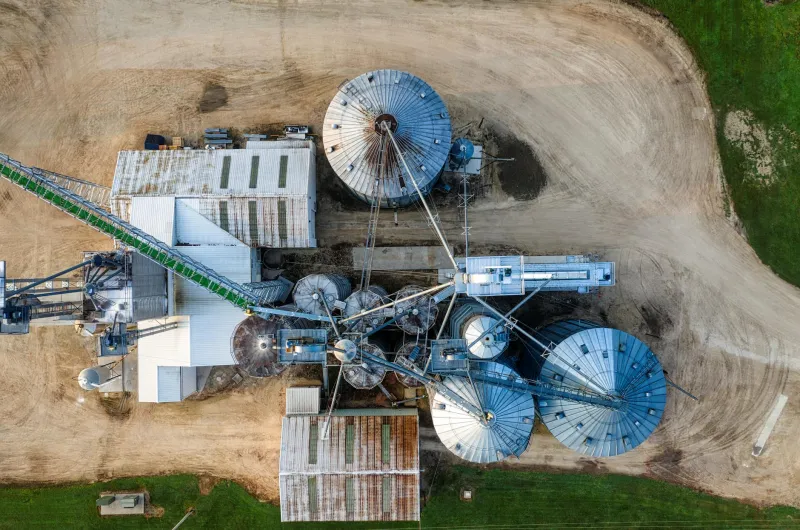
 Photo: Kewaunee County, Wisconsin, via www.kewauneecountyhistory.com
Sarah's story is replicated across America's agricultural heartland, where industrial farming's chemical dependency has created a slow-motion environmental catastrophe. From Iowa corn fields drenched in atrazine to North Carolina hog operations that generate more waste than major cities, the agricultural industry's relentless pursuit of production efficiency has transformed rural communities into sacrifice zones for corporate profit.
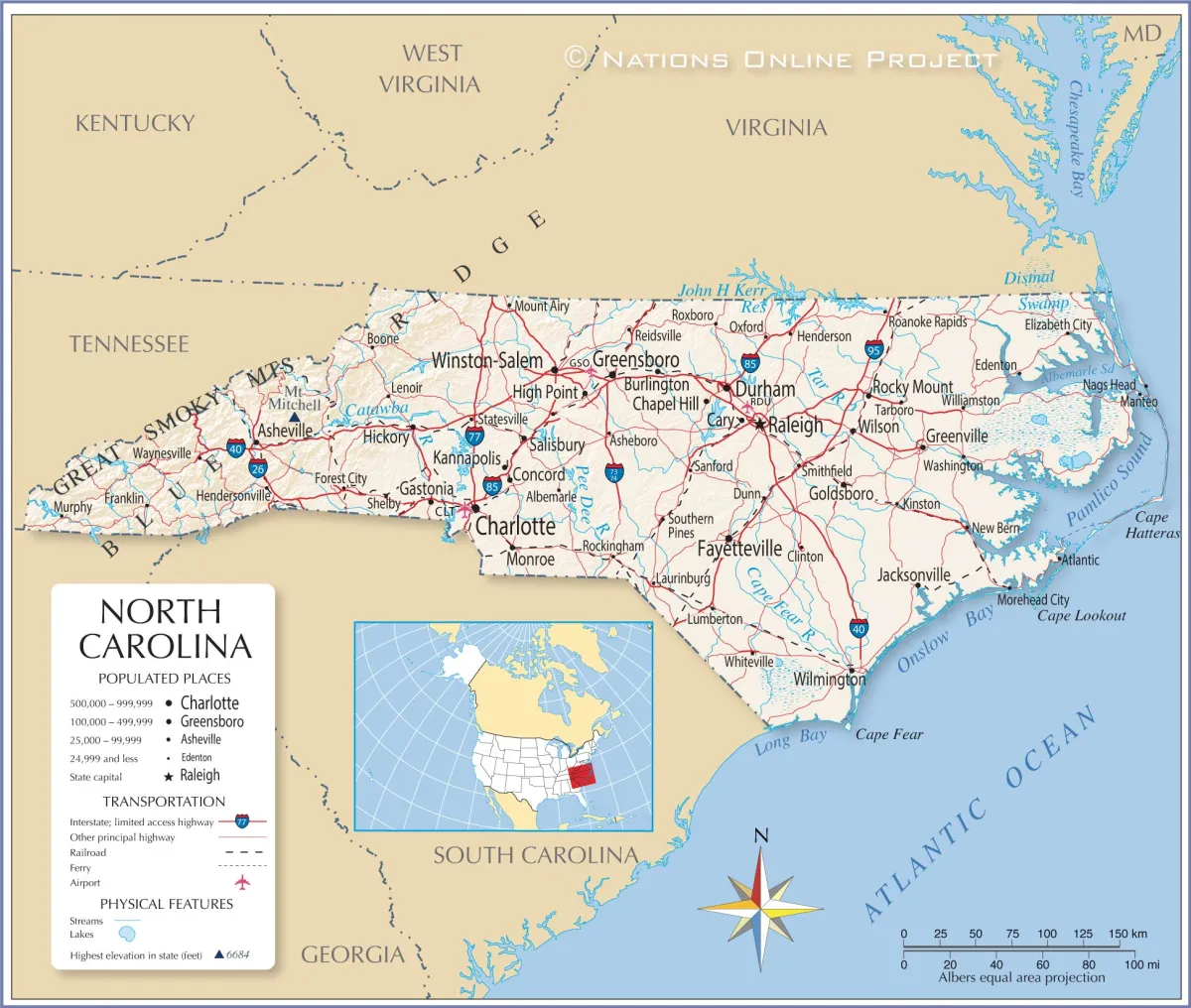 Photo: North Carolina, via www.nationsonline.org
The Chemical Treadmill
American agriculture applies 1.1 billion pounds of pesticides annually—roughly 4 pounds for every person in the country. This isn't traditional farming; it's industrial chemical warfare against nature, with rural communities caught in the crossfire. Glyphosate, the world's most widely used herbicide, has been detected in groundwater across 38 states. Atrazine, banned in the European Union since 2004 due to health concerns, remains one of America's most commonly used agricultural chemicals.
The Environmental Working Group's analysis of federal data found that 2,100 community water systems serving 170 million Americans contain detectable levels of agricultural chemicals. In farming communities, the contamination is often far worse. Iowa, the nation's leading corn producer, has agricultural chemicals in 57% of its private wells.
These chemicals don't stay put. They migrate through soil and groundwater, concentrate in streams and rivers, and accumulate in the food chain. Communities downstream from agricultural operations face elevated cancer rates, reproductive problems, and developmental disorders—the hidden health costs of cheap food production.
Regulatory Capture in Action
The Environmental Protection Agency, theoretically responsible for protecting public health from agricultural contamination, has been systematically captured by the industries it's supposed to regulate. The revolving door between agribusiness and EPA leadership has created a regulatory environment where industry profits take precedence over community health.
Under the Trump administration, the EPA approved dozens of new pesticides while weakening safety standards for existing chemicals. The agency reversed course on chlorpyrifos, a neurotoxic pesticide linked to developmental delays in children, after intense lobbying from agricultural interests. Even as scientific evidence of harm mounted, regulators chose corporate convenience over child safety.
This regulatory failure isn't partisan—it spans decades and multiple administrations. The Obama EPA approved 2,4-D, a component of Agent Orange, for use on genetically modified crops despite evidence linking it to cancer and reproductive problems. The Biden administration has made incremental improvements but hasn't fundamentally challenged the chemical-intensive agriculture model that generates these problems.
The Factory Farm Waste Crisis
Industrial livestock operations produce 1.4 billion tons of animal waste annually—130 times more than human sewage. Unlike human waste, which receives treatment before discharge, animal waste from factory farms is stored in massive lagoons and sprayed onto fields with minimal oversight. The result is widespread contamination of air, water, and soil in rural communities.
North Carolina's hog industry, dominated by Smithfield Foods and other corporate giants, has turned eastern counties into a environmental justice nightmare. The state's 2,100 hog operations generate 19 million tons of waste annually, much of it stored in open lagoons that leak into groundwater and overflow during storms. Communities of color, who make up 39% of the population within three miles of these operations, bear the brunt of the pollution.
Residents report constant odors, swarms of flies, and contaminated well water that burns their skin. Studies have linked proximity to hog operations to increased rates of asthma, kidney disease, and infant mortality. When Hurricane Florence flooded dozens of waste lagoons in 2018, releasing millions of gallons of hog waste into rivers and streams, it wasn't a natural disaster—it was the predictable result of an industry that treats rural communities as dumping grounds.
The European Alternative
European Union regulations demonstrate that different approaches are possible. The EU has banned 1,317 pesticides approved for use in the United States, prioritizing public health over agricultural convenience. European farmers achieve comparable yields with dramatically lower chemical inputs, proving that industrial agriculture's chemical dependency is a choice, not a necessity.
France has reduced pesticide use by 20% since 2008 while maintaining agricultural productivity. Denmark has cut pesticide use in half since 1986 through taxes on chemical inputs and support for organic farming. These countries haven't abandoned agriculture—they've chosen sustainable models that don't sacrifice rural health for corporate profits.
The contrast is stark: while European regulators err on the side of caution, protecting public health even when scientific evidence is incomplete, American regulators demand proof of harm before restricting profitable chemicals. This regulatory philosophy treats rural communities as human test subjects in a vast chemical experiment.
Environmental Justice in Rural America
The agricultural pollution crisis is fundamentally an environmental justice issue, though it's rarely framed that way. Rural communities, particularly low-income areas and communities of color, are systematically exposed to higher levels of agricultural chemicals while having less political power to resist contamination.
In California's Central Valley, Latino farmworkers and their families face some of the highest pesticide exposures in the country. Children in agricultural areas have elevated rates of autism, ADHD, and cancer—the price of living near industrial farming operations. These communities often lack the resources to relocate or the political influence to demand stronger protections.
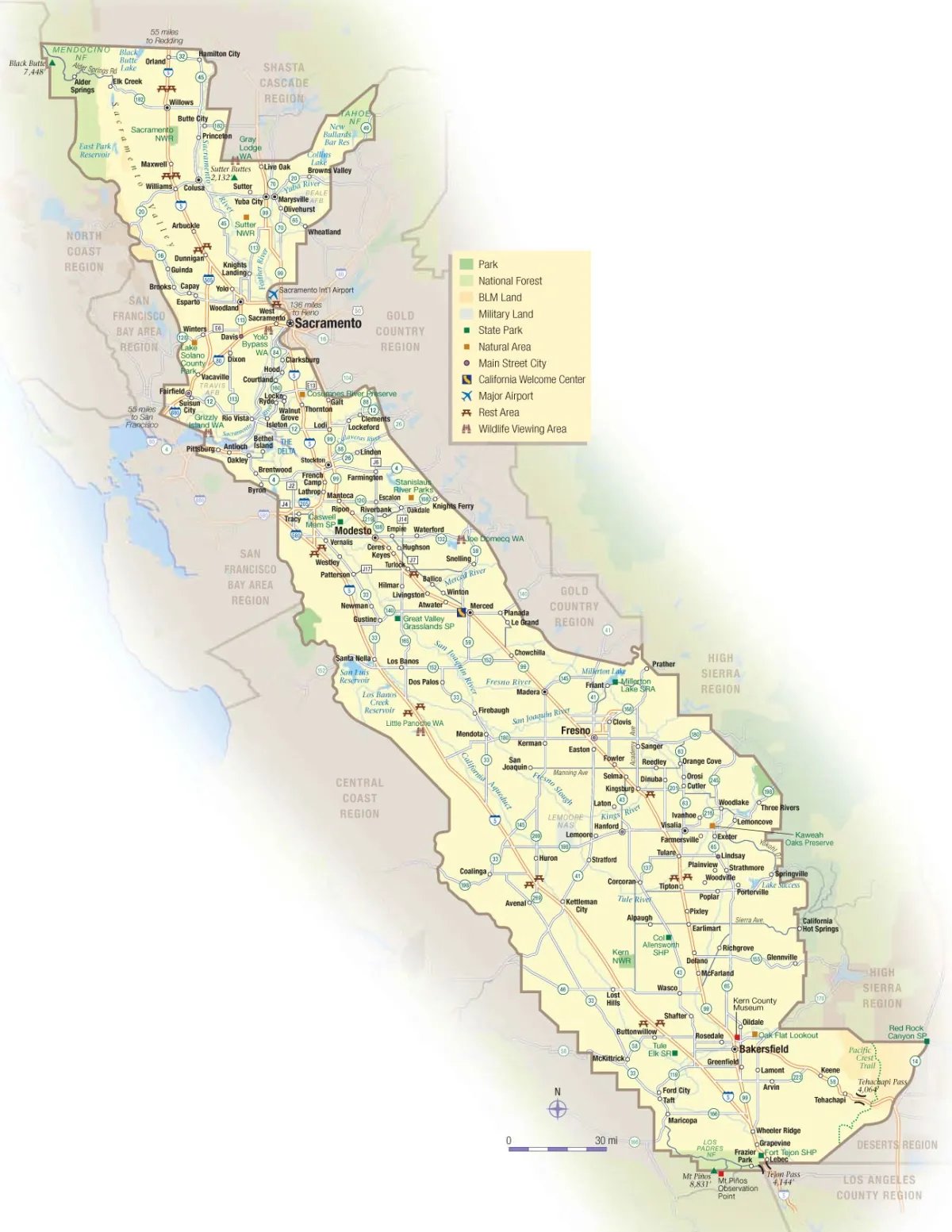 Photo: California's Central Valley, via mapsof.net
The United Church of Christ's groundbreaking study "Toxic Wastes and Race" found that communities of color are disproportionately exposed to environmental hazards. While the study focused on urban pollution, the same dynamics operate in rural areas, where agricultural operations cluster near communities with the least political power to resist them.
The True Cost of Cheap Food
American consumers pay artificially low prices for food because the true costs—environmental cleanup, healthcare for poisoned communities, ecosystem restoration—are externalized onto rural residents. This isn't efficient markets; it's subsidized destruction that privatizes profits while socializing costs.
The health impacts alone are staggering. A Harvard study estimated that agricultural pollution causes $157 billion in annual health costs, including increased rates of cancer, respiratory disease, and neurological disorders. These costs don't appear on grocery store price tags, but they're paid by families like Sarah Braun's, who must buy bottled water to keep their children safe.
Breaking the Chemical Dependency
Transforming American agriculture requires more than individual consumer choices—it demands systemic policy changes that prioritize community health over corporate profits. That means strengthening EPA regulations on agricultural chemicals, closing loopholes that exempt factory farms from pollution controls, and supporting farmers who want to transition to sustainable practices.
Successful models exist. Iowa's Nutrient Reduction Strategy has helped some farmers reduce fertilizer use while maintaining yields. Cover crop programs sequester carbon while reducing chemical runoff. Organic farming, while still a small fraction of total production, demonstrates that profitable agriculture is possible without poisoning rural communities.
But individual farm improvements aren't enough. We need policies that internalize the true costs of chemical-intensive agriculture: taxes on pesticides and synthetic fertilizers, strict liability for contamination, and robust enforcement of environmental laws. We need to end the regulatory capture that allows agricultural interests to write their own rules.
The Choice Before Us
The agricultural pollution crisis represents a fundamental choice about what kind of country we want to be. We can continue down the current path, where corporate agribusiness externalizes costs onto rural communities while regulators look the other way. Or we can choose a different model—one that produces food without poisoning the people who live near farms.
This isn't anti-agriculture; it's pro-farmer and pro-community. Small and mid-sized farmers are often victims of the same system that forces them to compete with industrial operations that cut costs by dumping pollution on their neighbors. A truly sustainable agricultural system would support farmers while protecting the communities that sustain them.
Every glass of contaminated water, every child's cancer diagnosis, every family forced to choose between their health and their home represents a policy failure—and an opportunity for change. Rural communities deserve the same environmental protections as wealthy suburbs, the same clean water as corporate boardrooms, the same right to health as everyone else in America.