
The Hidden Body Count of American Capitalism
Miguel Ramirez was 34 years old when he collapsed from heat exhaustion in a Texas warehouse, his core body temperature reaching 108 degrees as he picked orders in a facility where management had disabled air conditioning to "save costs." He died three days later, leaving behind two young children and a wife who discovered that his employer faced no criminal charges—just a $7,000 OSHA fine that the company's lawyers would likely reduce to a fraction of that amount.
Across the country in a North Carolina poultry plant, 28-year-old Keisha Williams was crushed by machinery that should have been equipped with safety guards mandated by federal regulations. The plant had been cited for similar violations twice in the previous year, but fines totaling $15,000—less than the company's CEO earned in a single day—had done nothing to force compliance.
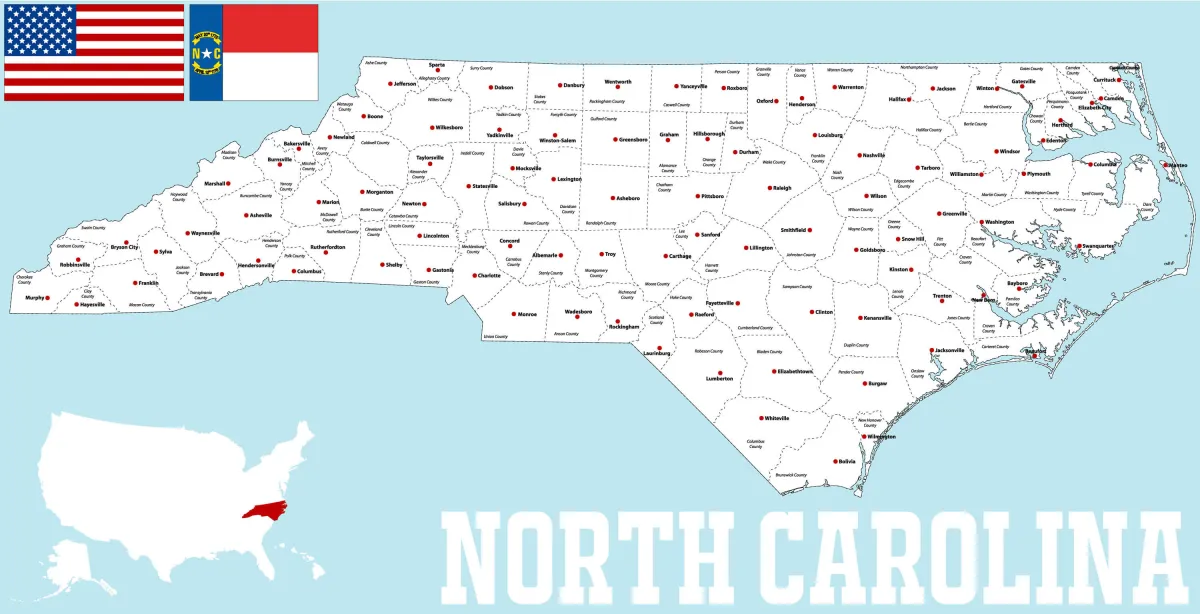 Photo: North Carolina, via www.guideoftheworld.com
These aren't isolated tragedies—they're symptoms of a workplace safety system so broken that America has become one of the most dangerous places to work among developed nations. Every day, 15 workers die from preventable workplace injuries, while hundreds more succumb to occupational diseases caused by toxic exposure. The human cost of America's refusal to take worker safety seriously is written in blood, and the victims are overwhelmingly the workers with the least power to demand protection.
OSHA: Defanged by Design
The Occupational Safety and Health Administration was created in 1970 with a bold mandate: ensure that every American worker goes home safe at the end of the day. But 54 years later, OSHA has been systematically defunded and defanged to the point where it can barely fulfill its basic mission. The agency currently employs fewer than 800 federal inspectors to monitor 8 million workplaces—meaning that the average workplace can expect an OSHA inspection once every 165 years.
This enforcement crisis isn't an accident—it's the result of decades of corporate lobbying and political sabotage. Since 1980, OSHA's budget has remained essentially flat while the workforce it's supposed to protect has grown by 60%. Adjusted for inflation, the agency's purchasing power has actually declined by 30% over the past four decades, even as workplace hazards have become more complex and deadly.
The Trump administration accelerated this destruction, proposing budget cuts that would have eliminated 160 inspector positions while rolling back safety standards for silica exposure, beryllium, and infectious diseases. The Biden administration restored some funding and reversed the most egregious rollbacks, but OSHA remains chronically understaffed and underpowered compared to workplace safety agencies in peer nations.
The Racial Geography of Workplace Death
Workplace fatalities aren't distributed equally across American society—they follow the same patterns of racial and economic inequality that define every other aspect of American life. Latino workers die on the job at twice the rate of white workers, while Black workers face fatality rates 20% higher than the national average. These disparities reflect both occupational segregation—workers of color are concentrated in the most dangerous industries—and systematic discrimination in safety enforcement.
A 2023 analysis by the National Institute for Occupational Safety and Health found that workplaces with majority-Latino workforces received 40% fewer OSHA inspections than similar facilities with majority-white workers, even after controlling for industry and violation history. When inspectors did visit, they were more likely to issue warnings rather than citations for identical violations.
The agriculture industry provides the starkest example of this racialized safety crisis. Farmworkers, who are 83% Latino and largely undocumented, face fatality rates five times higher than the average American worker. They die from heat exposure, pesticide poisoning, and machinery accidents that would be prevented by basic safety measures in other industries. Yet agriculture receives only 3% of OSHA's enforcement resources, despite employing 2.6 million workers in demonstrably dangerous conditions.
Heat Deaths in the Amazon Economy
The explosion of warehouse and logistics work has created new categories of workplace death that barely existed a generation ago. As companies like Amazon prioritize delivery speed over worker safety, warehouse workers face quotas that make heat-related illness almost inevitable. Internal company documents revealed that Amazon warehouses recorded heat-related injuries at nearly double the rate of other warehouses, yet the company successfully lobbied against federal heat safety standards.
The problem extends beyond individual companies to the structure of modern logistics work. Warehouse workers are often classified as temporary employees or independent contractors, which allows companies to avoid responsibility for safety violations. When workers die, liability gets shuffled between temp agencies, logistics companies, and facility owners in a shell game that ensures no one faces meaningful consequences.
During the summer of 2023, at least 37 warehouse workers died from heat-related causes, according to data compiled by the National Institute for Occupational Safety and Health. These deaths were entirely preventable—workplace heat standards exist in states like California and Washington, where fatality rates are significantly lower. But federal OSHA has refused to implement national heat standards, bowing to industry pressure despite mounting evidence of the crisis.
The Meatpacking Killing Fields
No industry illustrates America's workplace safety crisis more clearly than meatpacking, where line speeds have increased 25% over the past decade while safety staffing has remained flat. Workers—predominantly Latino immigrants—face amputation rates three times higher than manufacturing workers generally, while suffering repetitive stress injuries that companies systematically underreport to avoid OSHA scrutiny.
The COVID-19 pandemic exposed the full brutality of this system. As meatpacking plants became virus hotspots, companies like Tyson and JBS forced workers to continue production without adequate protection, leading to at least 269 worker deaths and over 59,000 infections. Internal communications revealed that Tyson managers bet on how many workers would get sick, treating human life as entertainment while collecting billions in federal subsidies.
When OSHA finally investigated these outbreaks, the agency issued fines averaging just $15,615 per company—less than the cost of a mid-level sedan for corporations with annual revenues in the billions. This pathetic enforcement sent a clear message: worker safety is optional, and the penalty for killing employees is essentially a rounding error in corporate budgets.
International Comparisons Reveal American Exceptionalism in Worker Death
America's workplace fatality rate of 3.6 deaths per 100,000 workers is nearly double that of Canada (2.0) and three times higher than the United Kingdom (1.2). This gap reflects fundamentally different approaches to worker protection. European nations treat workplace safety as a human right, with robust enforcement agencies, criminal penalties for safety violations, and worker representatives with real power to shut down dangerous operations.
In Germany, workplace safety inspectors can impose immediate production shutdowns and criminal charges against managers who endanger workers. The result is a fatality rate of just 1.1 per 100,000 workers—less than one-third of America's rate. German workers also have legal rights to refuse unsafe work without retaliation, while American workers in most states can be fired for raising safety concerns.
These international comparisons demolish the argument that workplace deaths are an inevitable cost of economic development. Other wealthy nations have proven that strong safety enforcement is compatible with economic prosperity—indeed, countries with the strongest worker protections often have the most competitive economies.
A Political Choice About Expendable Lives
America's workplace safety crisis isn't a natural disaster or technological problem—it's the predictable result of political choices about whose lives matter. For four decades, corporate lobbying has systematically weakened OSHA while courts have made it nearly impossible to hold companies criminally liable for worker deaths. The result is a system where killing a worker carries lighter penalties than stealing a car.
Current federal law treats most workplace fatalities as civil violations rather than crimes, even when companies knowingly expose workers to deadly hazards. The maximum criminal penalty for willfully violating safety standards that result in death is just six months in prison—less than many states impose for drunk driving. This legal framework sends a clear message: worker lives are expendable, and corporate profits matter more than human safety.
The solution requires both immediate reforms and long-term structural change. OSHA's budget should be tripled to provide adequate enforcement, while criminal penalties for safety violations should match the severity of the harm caused. Workers need legal rights to refuse dangerous work and access to independent safety representatives who can't be fired by management.
The True Cost of Cheap Labor
Every preventable workplace death represents a failure of moral imagination—a society that has decided some lives are worth less than corporate convenience and shareholder returns, with the burden falling heaviest on the workers who can least afford to demand protection.