Algorithms Over Children: How Big Tech's Lobbying Machine Keeps Killing Federal Safety Legislation While Teen Mental Health Collapses

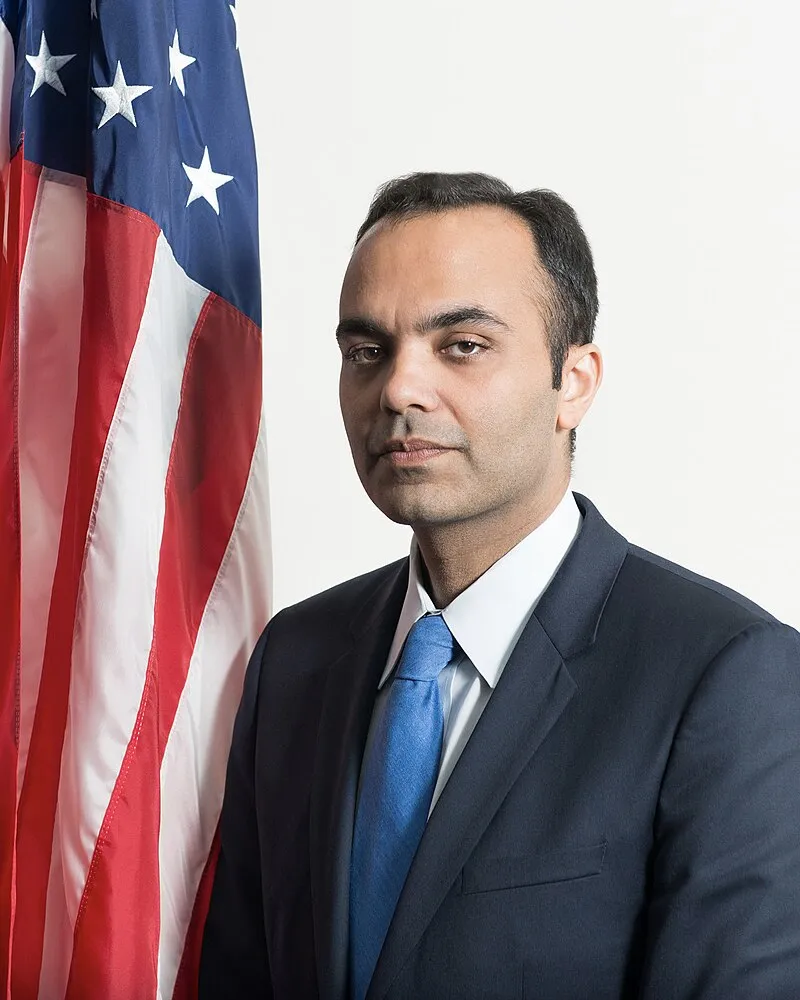
Photo: United States Department of Health and Human Services, Public domain, via Wikimedia Commons
A Crisis With a Name and a Cause
In June 2023, U.S. Surgeon General Dr. Vivek Murthy issued an advisory — a designation the office reserves for urgent public health threats — warning that social media posed a 'profound risk of harm' to the mental health of children and adolescents. It was not the first such warning. In 2021, Murthy had already sounded the alarm about a youth mental health crisis that he described as the defining public health challenge of our time. The American Psychological Association, the American Academy of Pediatrics, and dozens of major clinical research institutions have published findings pointing in the same direction: rates of adolescent depression, anxiety, self-harm, and suicidal ideation have climbed sharply since the early 2010s — a period that corresponds with the mass adoption of smartphone-based social media platforms.
 Photo: Dr. Vivek Murthy, via s3.amazonaws.com
The research is not uniform, and serious scholars debate the precise magnitude of the effect. But the weight of evidence — including internal documents produced by Meta in litigation that showed the company's own researchers had identified harms to teenage girls — is sufficient to have moved the medical establishment to a clear consensus position: these platforms, as currently designed, are causing measurable harm to children. The question is not whether that harm exists. The question is why Congress has done almost nothing about it.
Section 230 and the Liability Shield That Protects Platforms, Not People
The legal architecture enabling this inaction has a name: Section 230 of the Communications Decency Act, passed in 1996 when the commercial internet was in its infancy. The provision grants online platforms broad immunity from liability for content posted by third parties — a protection that was originally designed to allow nascent internet companies to moderate content without being treated as publishers, and to prevent a flood of defamation suits that might have strangled the web in its cradle.
That was 1996. In 2025, Section 230 is being invoked to shield trillion-dollar corporations from accountability for the algorithmic systems they designed, optimized, and deployed to maximize engagement among the most psychologically vulnerable users on their platforms — children. The platforms do not merely host content. They actively curate, amplify, and sequence it through recommendation engines built to exploit psychological vulnerabilities. The argument that this constitutes passive hosting — and therefore deserves the same immunity as a bulletin board — is one that serves shareholders, not the law's original intent.
Families who have lost children to suicide and self-harm — in some cases with direct digital trails linking the deaths to platform-recommended content — have filed lawsuits against Meta, TikTok, and other companies. Federal courts have repeatedly dismissed those suits under Section 230, even where the claim is not about third-party content but about the platform's own algorithmic design choices. The distinction matters enormously: no one is arguing that platforms should be liable for every post their users make. The argument is that they should be liable for the recommendation systems they engineered and the harms those systems predictably cause.
The Legislative Graveyard
Congress has not been entirely silent. The Kids Online Safety Act — KOSA — passed the Senate in July 2024 with a 91-to-3 vote, a margin of bipartisan agreement that is essentially unheard of in the current legislative environment. The bill would have required platforms to implement safety features for minor users, restrict algorithmic amplification of harmful content to children, and provide parents with greater oversight tools. It died in the House without a floor vote.
The EARN IT Act, which would have created accountability mechanisms around child sexual abuse material online, has been introduced in multiple Congresses and repeatedly stalled. The Children and Teens' Online Privacy Protection Act — a COPPA update — has similarly cycled through committee without resolution. The pattern is consistent: bipartisan concern, Senate action, House inaction. The explanation for that pattern requires following the money.
Between 2023 and 2024, Meta, Google, Amazon, Apple, and their trade associations spent hundreds of millions of dollars on federal lobbying — more than the pharmaceutical and oil industries combined in some reporting periods. Their lobbying apparatus includes former members of Congress, former senior Hill staffers, and a sophisticated coalition-building operation that has successfully framed child safety legislation as a threat to free speech, privacy, and small business — regardless of whether the specific bill in question implicates any of those concerns.
The Strongest Counterargument
Tech industry advocates and some civil liberties organizations, including the ACLU, have raised substantive concerns about certain legislative proposals — particularly provisions that might require platforms to scan private messages or that could be weaponized to restrict LGBTQ+ content accessible to minors. These are legitimate concerns that deserve serious engagement in the legislative drafting process. The answer to those concerns is better-drafted legislation, not no legislation. The argument that any attempt to create platform accountability for algorithmic harm must be defeated because some versions of such accountability could be misused is an argument that has conveniently served the interests of the industry for nearly a decade while the clinical data has continued to worsen.
The Families Behind the Statistics
The numbers that matter most are not in the lobbying disclosure reports. They are in the clinical literature and in the testimonies of parents who have appeared before Senate committees to describe what happened to their children. Rates of major depressive episodes among adolescents aged 12 to 17 increased by more than 60 percent between 2009 and 2019, according to data from the National Survey on Drug Use and Health. Emergency department visits for self-harm among adolescent girls increased sharply over the same period. The Surgeon General's 2023 advisory cited studies finding that adolescents who spend more than three hours per day on social media face double the risk of depression and anxiety symptoms.
These are not abstractions. They are children who entered a mental health emergency room. They are families who found search histories. They are parents who testified before the Senate Commerce Committee and then watched the House take no action. The human cost of congressional inaction is denominated in adolescent suffering — and it is accumulating every year that the lobbying machine succeeds in running out the clock.
 Photo: Senate Commerce Committee, via library.urnerbarry.com
What Forward Looks Like
The path forward requires decoupling child safety from the broader Section 230 debate and pursuing targeted, evidence-based reforms: liability for algorithmic design choices that demonstrably amplify harmful content to minors, mandatory safety-by-default settings for users under 18, independent auditing of recommendation systems, and meaningful data access for researchers who need to study these effects. None of these proposals requires dismantling the internet. All of them require treating children as a protected class whose welfare takes precedence over a platform's engagement metrics.
The political will to act exists — 91 senators demonstrated that. What is missing is the courage to resist an industry that has invested extraordinary resources in ensuring that courage remains unavailable in the House. That is not a technology problem. It is a democracy problem.
Every session Congress fails to act is another year the algorithm runs unchecked — and another generation of children pays the price for a liability shield that was never meant to protect the powerful from accountability for harm they designed, tested, and deployed at scale.