The Debtors' Prison Revival: How Court Fines and Fees Are Criminalizing Poverty in Plain Sight
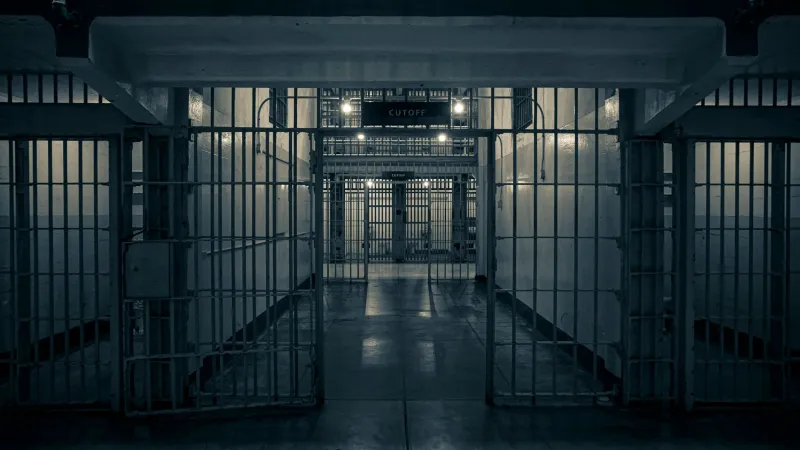
The Return of What We Thought We'd Abolished
Debtors' prisons were supposed to be a relic of Dickensian England, abolished in the United States during the 19th century as a barbaric practice that punished poverty rather than crime. Yet across America today, thousands of people sit in jail cells not because they committed new offenses, but because they cannot afford to pay court-imposed fines and fees that often exceed their monthly income.
The Supreme Court ruled in Bearden v. Georgia (1983) that imprisoning someone solely for inability to pay violates the Equal Protection Clause. But four decades later, local courts have perfected a system of legal laundering that accomplishes the same result through procedural sleight of hand. They don't jail people for being poor — they jail them for "failure to appear" at payment hearings they couldn't afford to attend, or "contempt of court" for missing installment payments they never had the money to make.
This isn't accidental. It's the predictable outcome of a municipal finance model that has made local governments structurally dependent on extracting revenue from their poorest residents through the criminal justice system.
The Fine-and-Fee Industrial Complex
In Ferguson, Missouri, the Department of Justice investigation following Michael Brown's death revealed a city that generated 23% of its budget through court fines and fees — mostly extracted from Black residents who comprised 67% of the population but 85% of traffic stops. Ferguson wasn't an outlier; it was a case study in how hundreds of American cities balance their books on the backs of people who can least afford it.
 Photo: Ferguson, Missouri, via i.redd.it
The mechanics are devastatingly simple. A traffic ticket that costs $150 becomes $500 with court costs, processing fees, and late penalties. Miss a payment, and the fine doubles. Miss a court date because you're working two jobs and can't take time off, and a warrant is issued. Get arrested on that warrant, and you're charged jail fees — sometimes $50 per day — that accumulate while you sit in custody waiting for a hearing you still can't afford to resolve.
Brent Robinson, a construction worker in Alabama, was arrested for driving with a suspended license — suspended because he couldn't pay traffic fines from three years earlier. His original $100 ticket had grown to $1,847 through fees and penalties. After spending six days in jail, he was released with an additional $300 in jail fees and a payment plan requiring $200 monthly installments. His take-home pay was $1,200 per month.
The Racial Mathematics of Municipal Revenue
The demographics of fine-and-fee collection aren't random. Department of Justice investigations in Ferguson, New Orleans, and Baltimore documented systematic patterns where Black and Latino drivers are stopped at disproportionate rates, cited for discretionary offenses like "manner of walking" or "disturbing the peace," and charged fees that compound into insurmountable debt.
 Photo: New Orleans, via 4.bp.blogspot.com
In Benton County, Washington, a 2019 analysis found that while Latino residents comprised 13% of the population, they received 34% of traffic citations and 47% of failure-to-pay warrants. The disparity wasn't explained by driving patterns or violation rates — it reflected targeted enforcement designed to maximize revenue extraction from communities least likely to have resources for legal challenges.
This creates a vicious cycle where the communities most burdened by police enforcement are also most likely to generate the fine revenue that funds continued enforcement. Poor neighborhoods become ATMs for municipal budgets, with residents cycling repeatedly through a system designed to ensure they can never fully pay off their debts.
Constitutional Violations Hidden in Plain Sight
The Supreme Court's Bearden decision requires courts to conduct "ability to pay" hearings before jailing someone for unpaid fines, determining whether non-payment reflects willful refusal or genuine indigence. In practice, these hearings are often perfunctory exercises where defendants are asked to prove a negative — that they have no money hidden away — while facing judges who view poverty as a character flaw rather than an economic condition.
Public defenders, where they exist at all in municipal courts, often handle hundreds of cases per day and lack time for meaningful advocacy. Many defendants appear unrepresented, unaware they have constitutional rights, and facing judges who conflate inability to pay with unwillingness to comply with court orders.
The American Civil Liberties Union has documented cases where courts jail people for owing as little as $28, impose payment plans that exceed defendants' entire monthly income, and refuse to consider alternatives like community service that don't generate revenue. These practices violate not just Bearden but fundamental due process principles — yet they continue because oversight is minimal and appeals are rare.
The Poverty Tax That Funds Government
The fine-and-fee system represents a regressive tax that falls most heavily on people least able to bear it. Unlike traditional taxes, which are assessed based on ability to pay, court fines impose identical burdens on minimum-wage workers and millionaires alike. A $500 fine represents two weeks' take-home pay for someone earning $15 per hour, but pocket change for someone earning $150,000 annually.
This regressivity is compounded by the cascading consequences of unpaid fines. Driver's license suspensions for unpaid tickets make it harder to get to work, leading to job loss and further inability to pay. Criminal convictions for driving with suspended licenses create barriers to employment, housing, and education that extend punishment far beyond any proportionate response to the original violation.
Meanwhile, municipalities become addicted to fine revenue in ways that distort law enforcement priorities. Police departments are incentivized to focus on citation-generating activities rather than public safety, and courts are pressured to impose financial penalties rather than pursue restorative justice or rehabilitation.
The Democracy-Corroding Effects
Beyond individual suffering, the fine-and-fee system undermines democratic participation itself. People with outstanding warrants for unpaid fines often avoid civic engagement, fearing arrest at polling places or public meetings. Communities subjected to aggressive fine collection lose trust in government institutions, viewing courts and police as predatory forces rather than public services.
The system also creates perverse incentives for local political accountability. Officials can fund government services through fine revenue rather than raising taxes on constituents who vote, allowing them to appear fiscally conservative while extracting resources from populations with limited political power.
Critics argue that some enforcement mechanism is necessary to ensure court orders are followed and that community service alternatives can be logistically complex. But these concerns miss the fundamental point: the current system doesn't actually improve compliance or public safety. It simply transfers wealth from poor families to municipal coffers while cycling vulnerable people through jails at enormous public cost.
Breaking the Cycle
Reform requires both immediate relief and structural change. Several states have eliminated driver's license suspensions for unpaid fines, recognizing that taking away people's ability to work doesn't improve their ability to pay. Others have capped fine-and-fee revenue as a percentage of municipal budgets, forcing cities to develop more sustainable funding models.
The federal government could condition law enforcement grants on compliance with Bearden requirements, creating financial incentives for constitutional compliance. State supreme courts could mandate ability-to-pay assessments and require alternatives to incarceration for indigent defendants.
But ultimately, ending the debtors' prison revival requires acknowledging that justice cannot be a commodity available only to those who can afford it. A legal system that imprisons people for poverty isn't maintaining order — it's manufacturing inequality while calling it law enforcement.
The choice is clear: America can have a justice system that serves all citizens equally, or it can have a fine-and-fee extraction system that criminalizes poverty while enriching municipalities — but it cannot have both.