The Gerrymandering Machine: How Precision Data Turned Redistricting Into a Science of Voter Suppression
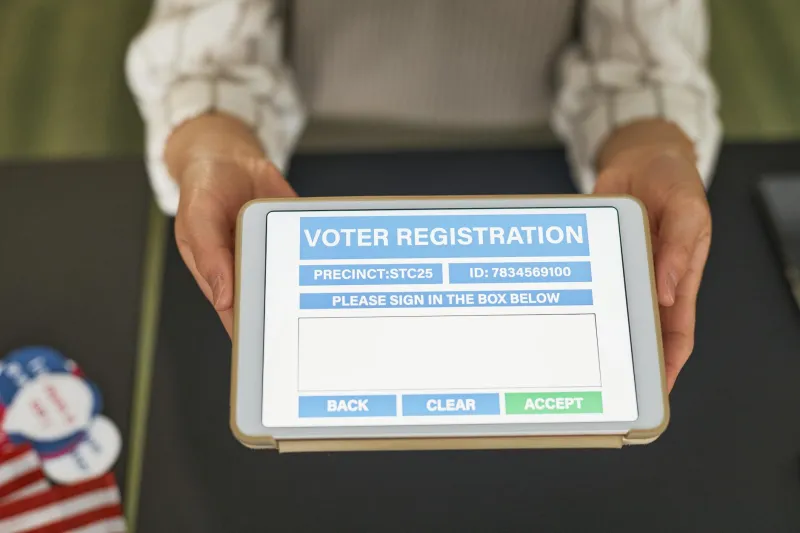
When Democracy Becomes Data Science
Every decade, America redraws its political map. What was once a rough-and-tumble process of political horse-trading has evolved into something far more sinister: a precision-engineered system for nullifying the votes of millions of Americans before they're even cast. Armed with granular voter data, sophisticated mapping software, and Supreme Court protection, partisan operatives have transformed redistricting into the most effective voter suppression tool in modern American politics.
The 2020 redistricting cycle offered a masterclass in this new form of electoral manipulation. Using voter files that track individual political preferences down to the household level, Republican-controlled state legislatures carved up competitive districts with surgical precision, creating maps that virtually guarantee their party's control regardless of shifting voter sentiment.
The Technology of Disenfranchisement
Today's gerrymandering bears little resemblance to the crude district-drawing of previous generations. Modern map-makers work with databases containing millions of individual voter records, cross-referenced with demographic data, consumer preferences, and even social media activity. Sophisticated algorithms can predict with startling accuracy how each neighborhood—sometimes each street—will vote in future elections.
This technological revolution has made possible feats of electoral engineering that would have been unimaginable just two decades ago. In Wisconsin, Republican operatives used advanced analytics to create an Assembly map so precisely calibrated that Democrats would need to win statewide by more than 12 percentage points just to capture a bare majority of seats. In North Carolina, mapmakers explicitly aimed to create a congressional delegation that would remain 10-3 Republican regardless of vote share—a goal they achieved with mathematical precision.
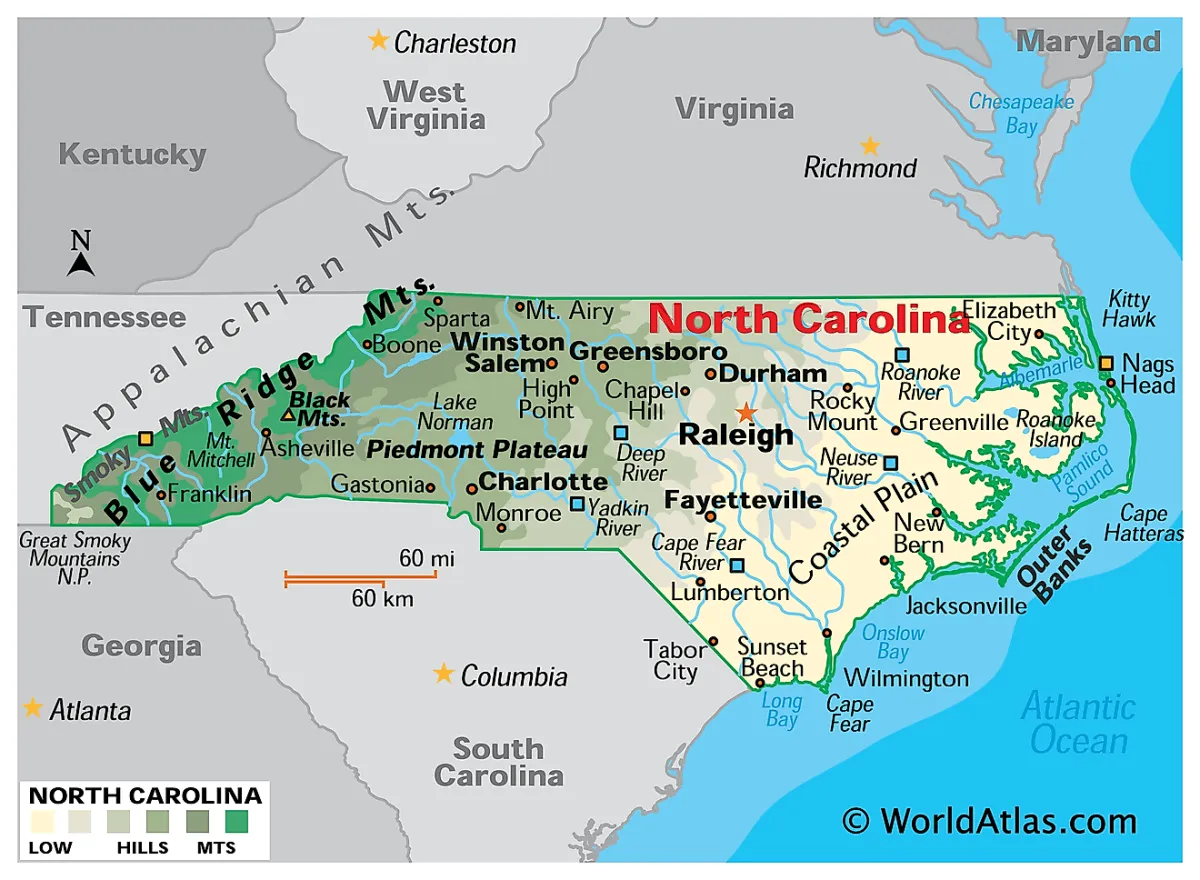 Photo: North Carolina, via www.worldatlas.com
The human cost of this technological prowess is staggering. The Brennan Center for Justice estimates that aggressive partisan gerrymandering has made roughly 40% of House seats effectively non-competitive, creating a legislative class insulated from voter accountability. When elections become foregone conclusions, politicians have little incentive to appeal to the political center or respond to changing public opinion.
The Supreme Court's Green Light
The gerrymandering arms race reached its logical conclusion with the Supreme Court's 2019 decision in Rucho v. Common Cause. By a 5-4 margin, the Court ruled that federal courts could not hear challenges to partisan gerrymandering, declaring it a "political question" beyond judicial review.
Chief Justice John Roberts' majority opinion essentially gave partisan mapmakers carte blanche to manipulate electoral boundaries for political gain. The decision overturned decades of precedent and abandoned millions of voters to the mercy of whichever party controlled their state legislature during redistricting years.
Justice Elena Kagan's dissent captured the stakes with devastating clarity: "For the first time ever, this Court refuses to remedy a constitutional violation because it thinks the task beyond judicial capabilities." The result, she predicted, would be "the continued degradation of American democracy."
Communities Under Attack
The victims of precision gerrymandering are not randomly distributed. Communities of color, young voters, and urban populations—groups that lean Democratic—bear the brunt of Republican map-manipulation strategies. The practice of "cracking" minority communities across multiple districts and "packing" them into a few heavily Democratic seats has become standard operating procedure.
In Texas, Republican mapmakers used the 2020 census to dilute the political power of the state's growing Latino population despite Hispanics accounting for half of the state's population growth over the previous decade. The new congressional map actually reduced Latino electoral influence in several districts, prompting multiple federal lawsuits under the Voting Rights Act.
Similar patterns emerged across the South and Midwest. In Georgia, Republican legislators cracked the diverse, fast-growing Atlanta suburbs across multiple congressional districts to minimize Democratic representation. In Ohio, mapmakers packed Democratic voters from Cleveland, Columbus, and Cincinnati into a handful of overwhelmingly blue districts while creating safe Republican majorities everywhere else.
The Racial Dimension
Modern gerrymandering represents a sophisticated evolution of historical voter suppression tactics. Where previous generations used poll taxes and literacy tests to exclude Black voters, today's map-manipulators use data analytics to minimize the political impact of diverse communities.
The Supreme Court's gutting of the Voting Rights Act in Shelby County v. Holder (2013) removed crucial federal oversight of redistricting in states with histories of racial discrimination. The result was predictable: a wave of racially discriminatory maps that courts have repeatedly struck down, often too late to affect multiple election cycles.
In Alabama, federal courts found that the state's congressional map illegally diluted Black political power by spreading Black communities across multiple districts. Similar rulings emerged from Louisiana, South Carolina, and other Southern states. But the legal process moves slowly, and by the time courts intervene, voters may have endured years of diminished representation.
The Democratic Response
While Republicans have weaponized redistricting more aggressively, Democrats are not innocent of gerrymandering. Blue states like Illinois, Maryland, and New York have drawn maps designed to maximize Democratic representation. However, the scale and sophistication of Republican efforts dwarf Democratic gerrymandering, partly because Republicans control more state governments and partly because Democratic voters are more geographically concentrated in urban areas, making them easier targets for dilution.
Some Democratic-controlled states have taken a different approach, creating independent redistricting commissions designed to produce fair maps. California, Colorado, and Michigan have adopted citizen-led commissions that prioritize competitive districts and respect for communities of interest. These reforms have produced notably fairer maps, though they require Democrats to voluntarily limit their own gerrymandering power.
The Path to Reform
The Supreme Court's abdication in Rucho means that redistricting reform must come from Congress or the states. The John Lewis Voting Rights Advancement Act would restore federal oversight of redistricting in states with histories of discrimination, while the Freedom to Vote Act would establish national standards for fair maps.
At the state level, the most promising reforms involve independent redistricting commissions and algorithmic approaches that prioritize traditional redistricting criteria over partisan advantage. Michigan's citizen-led commission, created by ballot initiative in 2018, produced maps that are significantly more competitive and fair than the gerrymandered districts they replaced.
Technological solutions also hold promise. Open-source mapping software and transparent redistricting algorithms could democratize the map-drawing process, allowing citizens to evaluate proposed districts against objective fairness criteria.
The Stakes for Democracy
The gerrymandering crisis reflects a deeper pathology in American democracy: the transformation of elections from competitions for voter support into exercises in voter manipulation. When politicians can engineer their own electoral safety through map manipulation, the fundamental democratic principle of accountability breaks down.
The consequences extend far beyond electoral politics. Gerrymandered legislatures produce more extreme candidates, more polarized policymaking, and less responsive government. When politicians don't need to compete for swing voters, they can ignore moderate voices and cater exclusively to their partisan base.
Fixing American democracy requires more than just fair maps, but it cannot happen without them. Until we restore competitive elections and meaningful voter choice, our democratic institutions will continue to reflect the preferences of map-makers rather than the will of the people.