Sign Here at Seventeen: How Military Recruiters Target the Poor While Wealthy Schools Stay Off-Limits
The Provision Nobody Talks About
Buried in Section 9528 of the No Child Left Behind Act of 2001 is a mandate that receives almost no public attention relative to its reach and implications. Under this provision, every public secondary school that receives federal Title I funding — funding specifically directed at schools serving low-income students — must provide military recruiters with the name, address, and telephone number of each student upon request. Schools that refuse lose federal funding. Parents may opt their children out, but the default is disclosure, and the opt-out mechanism is rarely communicated clearly or consistently.
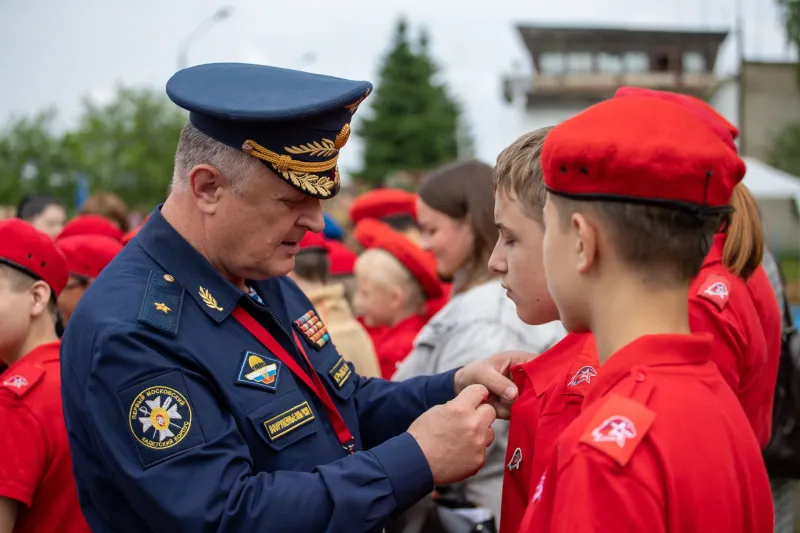
Private schools — including elite preparatory academies whose graduates fill the officer corps rather than the enlisted ranks — are under no such obligation. Their students' contact information is not handed to recruiters. Their hallways are not visited by uniformed personnel bearing brochures and enlistment incentives. The mandate falls, with near-mathematical precision, on the schools that serve the students least equipped to evaluate the long-term consequences of an enlistment contract signed at seventeen.
Where Recruiters Go — and Why
Military recruiters do not distribute their efforts evenly across the American educational landscape. They concentrate them, deliberately and systematically, in communities where the alternatives to military service are fewest and the economic pressure to accept a guaranteed paycheck is greatest.
The Department of Defense's own data, analyzed by researchers at various points over the past two decades, consistently shows that enlistment rates are highest in rural communities, post-industrial towns, and urban neighborhoods with high poverty rates and underperforming schools. A 2020 analysis by the American Friends Service Committee — an organization that has tracked military recruitment practices for years — found that recruiter presence was significantly higher in schools with larger proportions of Black, Latino, and low-income students than in schools serving predominantly white, affluent populations.
This is not coincidence. It is strategy. The military's own recruitment manuals identify economic incentive as a primary lever — the promise of a signing bonus, a steady salary, healthcare coverage, and post-service GI Bill benefits is most compelling when the alternative is an unaffordable college tuition bill, a minimum-wage job, or chronic unemployment in a community where manufacturing has long since left. Recruiters are trained to identify and engage students for whom the military represents not merely a career option but a genuine economic lifeline.
The Seventeen-Year-Old in the Room
The age dimension of this system deserves sustained attention. Military recruiters are legally permitted to visit schools and engage with students who are 17 years old — minors, under every other legal framework that governs consent and contract. A 17-year-old cannot purchase alcohol, cannot vote, cannot enter into most civil contracts, and in many states cannot consent to a tattoo without parental permission. They can, however, sign a military enlistment contract, with parental signature, that commits them to years of service — service that may include combat deployment — before they have graduated high school.
Developmental psychologists have long documented that adolescent decision-making is qualitatively different from adult cognition, particularly in high-stakes, high-pressure situations. The prefrontal cortex — the region of the brain most associated with long-term consequence evaluation and impulse regulation — is not fully developed until the mid-twenties. Recruiting 17-year-olds in environments where economic pressure is acute and alternatives are scarce is not merely a demographic strategy. It is, from a neurodevelopmental standpoint, a deliberate targeting of cognitive vulnerability.
The strongest counterargument — and it is not an unserious one — is that military service is a legitimate and honorable career path that provides real opportunities to young people who might otherwise have none. The GI Bill has genuinely transformed lives. Military training has provided marketable skills to generations of working-class Americans who lacked other pathways to economic stability. Dismissing the genuine value of military service to many who choose it would be both inaccurate and condescending.
But that argument does not justify the structural inequality embedded in the recruitment system itself. The question is not whether military service can be valuable. The question is whether a system that mandates data disclosure at low-income schools, concentrates recruiter effort in economically distressed communities, and targets minors before they have the legal standing to make most adult decisions can be described as a system of free and informed choice — or whether it is more accurately described as a system that harvests the economic desperation of working-class youth as a defense labor supply.
The Class Geography of Who Serves and Who Commands
The class stratification of the American military is not a secret. It is documented, acknowledged, and largely accepted as a natural feature of the volunteer force. Enlisted personnel — those who serve in combat roles, who bear the physical risks of deployment, who make up the vast majority of casualties — are drawn overwhelmingly from working-class and lower-middle-class backgrounds. Officers are drawn overwhelmingly from college-educated families. The two tracks rarely intersect.
A 2020 report from the Pew Research Center found that military veterans were more likely than non-veterans to have grown up in lower-income households and to come from families with prior military service — a self-reinforcing cycle in which military participation becomes a class-specific tradition rather than a broadly shared national obligation. Meanwhile, the children of the political and economic elite who send others to war are, with rare exceptions, absent from the enlisted ranks.
This is the context in which Section 9528 operates. It is not a neutral provision for ensuring that all students have access to information about military careers. It is a mechanism that directs the machinery of military recruitment toward the communities that can least afford to say no — while leaving the communities that produce the nation's policymakers and executives largely untouched.
What Reform Would Require
Reformers have proposed several approaches to addressing the structural inequity of military recruitment. The most straightforward would be to repeal or substantially revise Section 9528, replacing the opt-out default with an opt-in requirement that ensures parental and student informed consent before contact information is shared. Several advocacy organizations, including the ACLU and various veterans' groups, have pushed for this change.
A more ambitious reform would apply uniform recruitment access rules across all secondary schools — public and private — ensuring that the children of affluent families face the same exposure to military recruitment as the children of poor ones. This proposal has a clarifying political function: it would force a national conversation about who serves, why, and under what conditions. That conversation has been conspicuously absent from mainstream political debate for decades.
Broader structural change would require addressing the underlying economic conditions that make military enlistment feel like the only viable option for so many young people in distressed communities — investing in affordable higher education, robust vocational training, and living-wage employment pathways that give 17-year-olds in Appalachia and the South Side of Chicago genuine alternatives to a recruiting sergeant's pitch.
Until that investment is made, the current system will continue to function as it was designed to: directing the cost of national defense disproportionately toward those with the fewest choices, while those who make the decisions about when and where to deploy them remain safely out of the recruiter's reach.