The Conservation Con: How the GOP's Public Lands Selloff Is Quietly Transferring America's Natural Heritage to Extractive Industry
The Conservation Con: How the GOP's Public Lands Selloff Is Quietly Transferring America's Natural Heritage to Extractive Industry
While environmental advocates focus on high-profile battles over national monument designations and offshore drilling permits, a quieter but more fundamental transformation is underway across the American West. Through a coordinated campaign of legislation, litigation, and regulatory capture, conservative lawmakers and extractive industries are systematically dismantling the framework of federal public land management that has protected 640 million acres for over a century.
This isn't about returning power to local communities or improving land management efficiency. It's about transferring one of America's greatest collective assets — public lands that belong to all citizens — into private hands that will extract profit while externalizing environmental and social costs. The endgame is clear: convert America's natural heritage from a public trust into a private commodity.
The ALEC Playbook: Manufacturing Grassroots Opposition
The American Legislative Exchange Council (ALEC), a corporate-funded organization that drafts model legislation for conservative state lawmakers, has been central to coordinating the public lands transfer movement. Since 2012, ALEC has promoted template bills calling for federal land transfers to state governments, framing the issue as "returning" lands that were supposedly "seized" by federal agencies.
This historical narrative is deliberately misleading. Most federal lands in the West were never owned by states — they remained in federal hands when territories achieved statehood, with the explicit understanding that they would be managed for national purposes. The Homestead Act, mining laws, and other 19th-century policies already transferred millions of acres to private ownership. What remains in federal hands represents the landscapes deemed too valuable, fragile, or strategically important for private exploitation.
ALEC's model legislation has appeared in nearly identical form across multiple states. Utah's Transfer of Public Lands Act, Nevada's Coalition for Self-Government in the West, and similar measures in Wyoming, Montana, and Idaho all follow the same template: demand federal land transfers while creating state agencies to facilitate eventual private sales.
The messaging strategy is equally coordinated. Rural communities are told that federal land management stifles economic development and local autonomy. Urban audiences hear about reducing federal bureaucracy and empowering state governments. Missing from both narratives is any mention of the extractive industries funding the campaigns or their plans for transferred lands.
The Economic Deception: Who Really Benefits from Public Lands
Proponents of land transfers argue that federal ownership prevents states from generating revenue through resource extraction and development. But this argument ignores the substantial economic benefits that public lands already provide to rural communities — benefits that would disappear under private ownership.
The outdoor recreation economy generates $887 billion annually and supports 5.2 million jobs, concentrated heavily in Western states with extensive public lands. Colorado's outdoor recreation industry employs more people than oil and gas extraction. Utah's mighty five national parks generate over $1 billion in annual economic activity. Montana's hunting and fishing industries support 37,000 jobs.
These economic benefits flow primarily to local communities through tourism spending, guide services, equipment sales, and hospitality businesses. Unlike extractive industries that export profits to distant shareholders, outdoor recreation creates distributed economic benefits that strengthen rural economies over the long term.
Moreover, federal agencies already provide revenue sharing to local governments through programs like Payments in Lieu of Taxes (PILT) and resource extraction royalties. Counties with significant federal lands often receive more revenue per acre than they would collect through property taxes on private land.
The real economic issue isn't federal ownership — it's that extractive industries want access to resources currently protected from development. Transferring lands to cash-strapped state governments would create pressure to sell or lease valuable properties to generate immediate revenue, regardless of long-term economic or environmental consequences.
State Governments: The Willing Middlemen
State governments have become willing partners in this transfer scheme, despite lacking the financial capacity to actually manage additional public lands. Most Western states already struggle to fund existing state parks and wildlife management areas. Taking on responsibility for millions of additional acres would require massive tax increases or dramatic cuts to other state services.
The obvious solution — selling transferred lands to private interests — is exactly what transfer advocates intend. Utah's own analysis concluded that the state would need to sell approximately 30% of any transferred federal lands to fund management of the remainder. Nevada's legislative commission studying land transfers acknowledged that private sales would be "inevitable" to generate necessary revenue.
This creates a perverse incentive structure: state governments become intermediaries facilitating the conversion of public assets into private profits. Politicians can claim they're defending state rights while actually serving as brokers for corporate land grabs.
The pattern is already visible in states that have received smaller federal land transfers. Texas sold 20,000 acres of former federal land to private developers within five years of transfer. Alaska has leased millions of acres of state lands to extractive industries, generating revenue for state coffers while eliminating public access.
Indigenous Rights: The Ignored Stakeholder
Lost in debates over state versus federal control is the reality that most Western public lands are the ancestral territories of Indigenous nations with treaty rights that predate both state and federal claims. Many tribes maintain hunting, fishing, gathering, and sacred site access rights on federal lands that could be threatened by transfer to state or private ownership.
The Bears Ears National Monument controversy exemplified this dynamic. Five tribal nations advocated for federal protection of landscapes containing thousands of sacred sites and culturally significant areas. State officials and extractive industries opposed the designation, seeking access for mining and energy development. When the Trump administration reduced the monument's boundaries, it prioritized industry access over Indigenous sovereignty and cultural preservation.
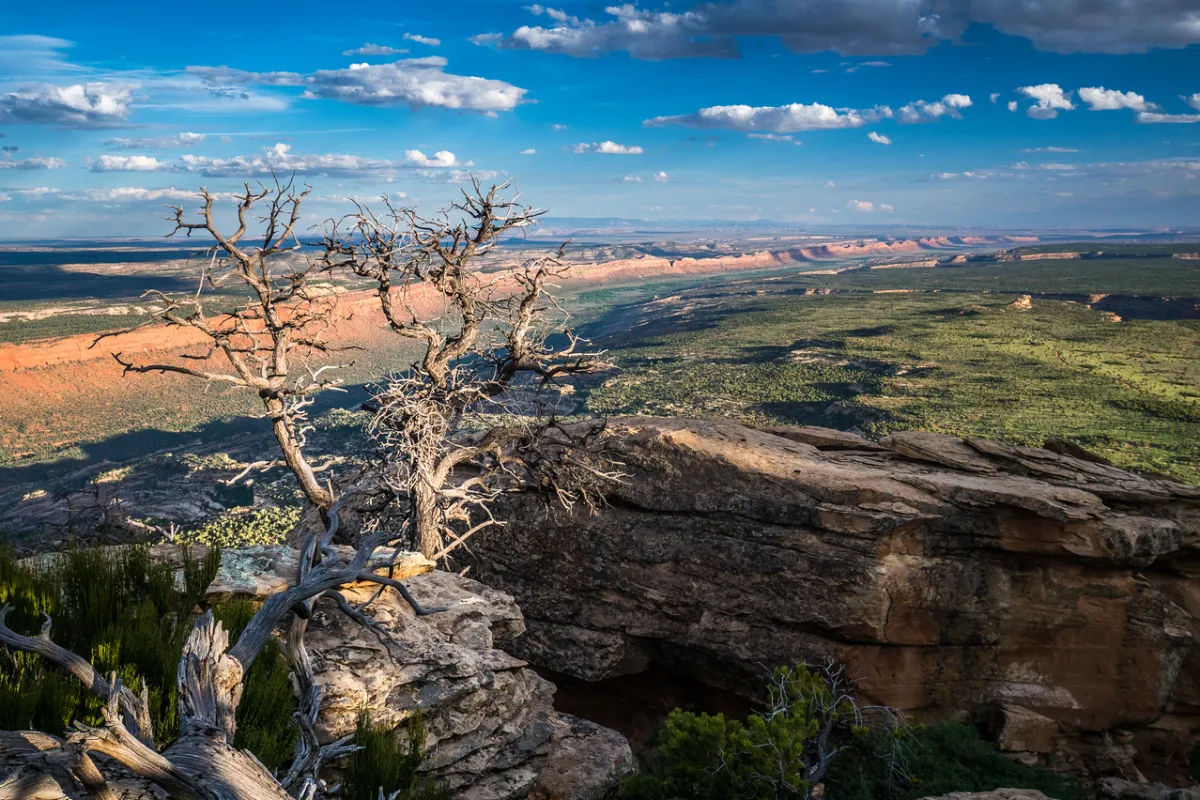 Photo: Bears Ears National Monument, via rstorage.filemobile.com
Public lands transfer would systematically undermine tribal treaty rights by removing federal trust responsibilities and subjecting Indigenous interests to state political processes that have historically excluded Native voices. Private ownership would eliminate tribal access entirely, converting sacred landscapes into corporate assets.
Climate Implications: The Carbon Bomb in Public Lands
Federal public lands contain approximately 25% of U.S. fossil fuel reserves, including coal, oil, and natural gas deposits worth trillions of dollars at current market prices. They also store massive amounts of carbon in forests, grasslands, and soil that would be released through development.
Maintaining these lands in public ownership with conservation management represents one of the most cost-effective climate strategies available. The carbon storage value of public lands exceeds $300 billion annually — far more than the potential revenue from resource extraction.
Transferring public lands to state and private ownership would unlock these carbon reserves for development, undermining U.S. climate commitments and accelerating global warming. The extractive industries supporting transfer campaigns understand this perfectly — they're not seeking local control, they're seeking carbon access.
Private landowners face no obligation to consider climate impacts in land use decisions. State governments, dependent on extraction revenues, would face pressure to maximize short-term income regardless of long-term environmental consequences. Only federal ownership with conservation mandates can ensure that public lands contribute to climate solutions rather than climate destruction.
The Democracy Deficit: Privatizing Public Decision-Making
Public lands represent one of the few remaining spheres where democratic governance still functions relatively well. Federal agencies operate under legal mandates to consider environmental protection, public access, and multiple use objectives. Decision-making processes include public comment periods, environmental impact assessments, and judicial review.
Private ownership eliminates democratic input entirely. Corporate landowners can exclude the public, extract resources without environmental review, and make land use decisions based solely on profit maximization. Former public assets become private fiefdoms where democratic values have no standing.
Even state ownership typically provides less democratic accountability than federal management. State land boards often operate with minimal public oversight, dominated by agricultural and extractive industry representatives. Public access can be restricted or eliminated based on political pressure or revenue considerations.
The transfer movement represents a fundamental assault on the democratic principle that certain landscapes belong to all Americans, not just those wealthy enough to purchase them.
Fighting Back: Defending the Public Trust
Resisting the public lands transfer movement requires understanding that this isn't a debate about government efficiency or local control — it's a battle over who owns America's natural heritage and who benefits from that ownership.
Progressives must articulate a positive vision for public lands that emphasizes their role as democratic institutions, economic engines for rural communities, and essential infrastructure for addressing climate change. This means defending federal ownership while supporting reforms that improve management, increase funding, and enhance community involvement in decision-making.
It also means exposing the corporate interests driving transfer campaigns and the economic deceptions they use to manufacture grassroots support. Rural communities deserve honest conversations about how public lands can support sustainable economic development rather than false promises about extraction revenues that will flow to distant shareholders.
Most fundamentally, it means recognizing that public lands embody a different set of values than private markets — values that prioritize collective benefit over individual profit, long-term stewardship over short-term extraction, and democratic governance over corporate control.
The fight for public lands is ultimately a fight for the kind of country we want to be: one where natural heritage belongs to everyone, or one where everything is for sale to the highest bidder.