Climate Migrants in America's Backyard: How the US Refuses to Recognize the Refugees It Helped Create
The Invisible Crisis
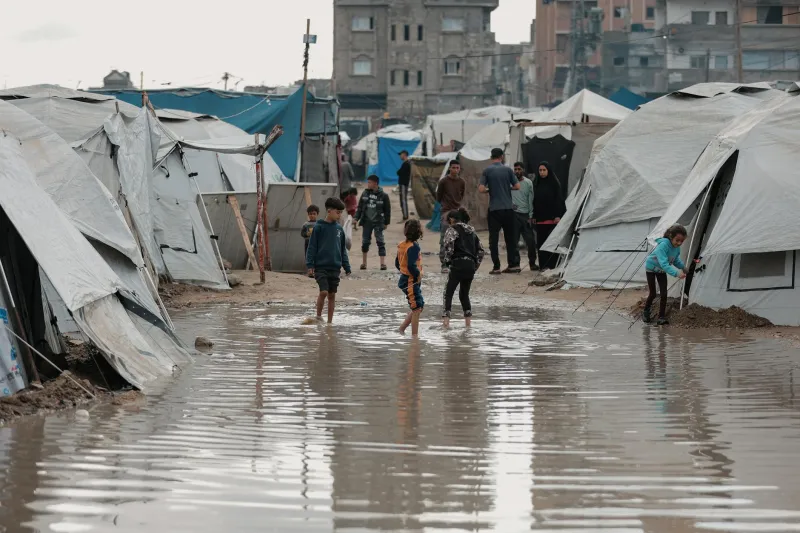
They flee hurricanes that grow stronger each year, droughts that last longer than their grandparents ever witnessed, and floods that swallow entire communities. From Honduras to the Marshall Islands, from Guatemala to Bangladesh, tens of millions of people are being forced from their homes by climate disasters that grow more frequent and severe with each passing season. Yet when these climate migrants reach America's borders, they encounter an immigration system that refuses to acknowledge the very phenomenon that displaced them.
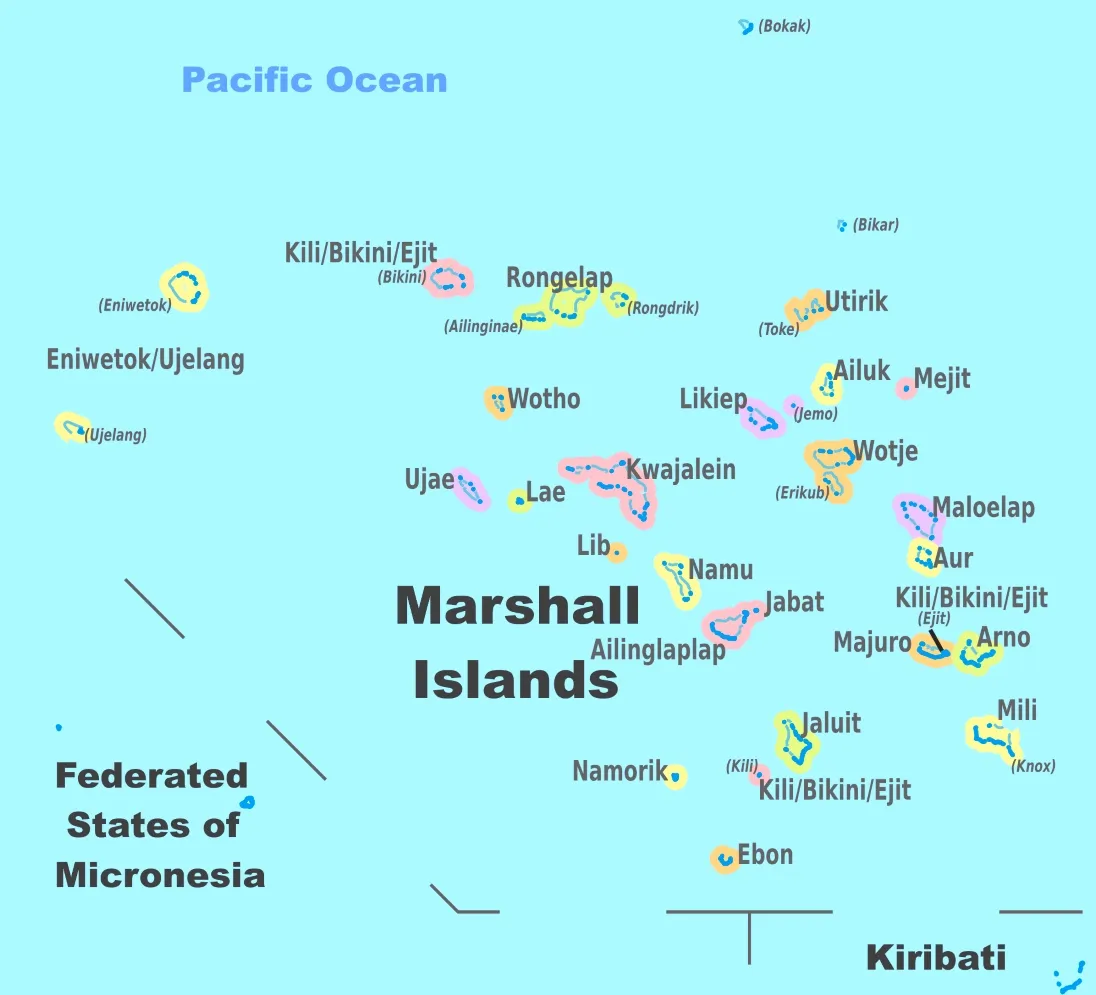 Photo: Marshall Islands, via ontheworldmap.com
The United States, responsible for roughly 25% of all historical carbon emissions, has systematically blocked international efforts to create legal protections for climate refugees while simultaneously pursuing policies that worsen the crisis driving displacement. This represents not just a failure of moral imagination but a deliberate choice to externalize the human costs of American prosperity onto the world's most vulnerable populations.
The Science of Displacement
Climate displacement is not a future threat—it is a present reality reshaping migration patterns across the globe. The Internal Displacement Monitoring Centre reports that weather-related disasters displaced 23.9 million people in 2019 alone, nearly three times more than those displaced by conflict and violence combined. By 2050, the World Bank estimates that climate change could displace up to 216 million people within their own countries, with millions more crossing international borders.
Central America exemplifies how climate change amplifies existing vulnerabilities. The region's "Dry Corridor," stretching from southern Mexico to Panama, has experienced unprecedented drought conditions that have destroyed subsistence agriculture and forced rural families into desperate poverty. Guatemala's government estimates that climate change threatens the food security of 3.5 million people—nearly one-fifth of the country's population.
Meanwhile, intensifying hurricanes devastate the region with increasing regularity. Hurricane Mitch in 1998 displaced 1.5 million people across Central America. Hurricane Eta and Iota in 2020 displaced hundreds of thousands more, hitting the same communities within weeks of each other—a pattern that climate scientists predict will become the new normal.
The Legal Vacuum
Despite overwhelming scientific evidence linking climate change to displacement, US immigration law contains no formal recognition of climate refugees. The 1951 Refugee Convention, which forms the basis of international refugee law, defines refugees as people fleeing persecution based on race, religion, nationality, political opinion, or membership in a particular social group. Climate displacement falls outside these narrow categories, leaving millions in legal limbo.
This gap is not accidental. When the international community negotiated the Global Compact for Safe, Orderly and Regular Migration in 2018—the first UN framework to address climate migration—the United States withdrew from the process entirely. The Trump administration explicitly rejected any international framework that might create legal obligations toward climate migrants, a position the Biden administration has only partially reversed.
The result is a system of selective responsibility that mirrors broader patterns of climate injustice. The countries least responsible for causing climate change bear the greatest burden of hosting climate migrants, while the largest historical emitters—led by the United States—maintain legal barriers that prevent displaced populations from seeking protection in the countries most responsible for their displacement.
Voices from the Frontlines
Behind the statistics are human stories that expose the moral bankruptcy of America's approach to climate migration. In Honduras, coffee farmers describe watching their crops wither as rainfall patterns shift and temperatures rise beyond what traditional varieties can tolerate. Many have joined the migrant caravans heading north, only to be turned away at the US border and returned to communities where climate change has made survival increasingly impossible.
The Marshall Islands present perhaps the starkest example of climate injustice. Rising sea levels threaten to submerge the entire nation within decades, yet Marshallese citizens—who hold a special immigration status due to US nuclear testing in their territory—face increasing restrictions on their ability to relocate to the United States. The cruel irony is unmistakable: America's nuclear program helped establish the scientific understanding of atmospheric warming, while its carbon emissions now threaten to complete the destruction that nuclear testing began.
Similar patterns emerge across the Pacific. Tuvaluan families watch their ancestral lands disappear beneath rising waters, while Bangladeshi farmers flee as saltwater intrusion destroys rice paddies that have fed their families for generations. When these climate migrants seek protection in the United States, they encounter an immigration system that treats their displacement as a personal choice rather than a consequence of global economic patterns that enriched the very country they seek to enter.
The Corporate Connection
The fossil fuel industry's role in blocking climate migration protections mirrors its broader strategy of avoiding liability for climate damages. Internal documents from ExxonMobil and other oil companies reveal decades of effort to prevent international climate liability frameworks that might hold carbon emitters responsible for displacement and other climate impacts.
This corporate influence extends directly to immigration policy. Industry groups have consistently opposed any expansion of refugee protections that might create precedents for climate liability. The American Petroleum Institute and other fossil fuel lobbies have worked closely with immigration restrictionist groups to frame climate migration as a national security threat rather than a humanitarian crisis requiring international cooperation.
The result is a policy framework that protects corporate profits while abandoning climate migrants to face displacement, poverty, and often death. When Hurricane Dorian devastated the Bahamas in 2019, the Trump administration initially offered temporary protected status to Bahamian survivors—then revoked the offer under pressure from anti-immigration groups funded by the same networks that support fossil fuel interests.
International Parallels
Other countries are beginning to develop legal frameworks for climate migration that highlight America's moral isolation. New Zealand has created a special visa category for Pacific Island climate migrants, while several European countries have extended temporary protection to people displaced by climate disasters. France has explicitly recognized the link between climate change and displacement in its asylum law, creating pathways for protection that the United States continues to reject.
These international developments expose the hollowness of American claims about global leadership on climate change. While the Biden administration has rejoined international climate agreements and increased emissions reduction targets, its refusal to address climate migration undermines its credibility and places the burden of addressing climate displacement on countries far less capable of providing protection.
A Framework for Justice
Creating legal protections for climate migrants would require confronting the fundamental injustice at the heart of climate change: those least responsible for causing the crisis bear its greatest costs. A just approach would begin with the principle of common but differentiated responsibility, requiring countries to provide protection in proportion to their historical emissions and current capacity.
For the United States, this would mean creating a new category of climate protection that acknowledges the causal link between American carbon emissions and global displacement. Such a framework might include temporary protected status for people displaced by climate disasters, permanent pathways for those facing long-term uninhabitability, and proactive resettlement programs for communities facing predictable displacement.
Beyond legal protections, climate justice requires addressing the root causes of displacement through rapid decarbonization and massive investments in climate adaptation for vulnerable communities. The costs of such investments pale in comparison to the moral and practical costs of continued inaction.
The Moral Imperative
The climate migration crisis exposes a fundamental choice facing American society: whether to acknowledge responsibility for the global consequences of domestic prosperity or to maintain the fiction that climate change is someone else's problem. Every hurricane season, every drought, every flood makes this choice more urgent and the consequences of inaction more severe.
Historical precedent suggests that moral reckonings, when they finally come, often exceed what previously seemed politically possible. The question is not whether the United States will eventually be forced to confront its role in climate displacement, but whether it will do so proactively as a matter of justice or reactively as a matter of crisis management.
For now, America's climate migrants remain invisible in law even as they become increasingly visible in reality—a testament to the power of legal fiction to obscure moral truth, and a reminder that justice delayed is justice denied for those whose homes are already underwater.