The Bail Bond Racket: How a Uniquely American Industry Profits From Pretrial Punishment and Keeps the Poor Behind Bars

In courtrooms across America, a peculiar ritual plays out thousands of times each day. A judge sets bail at $5,000 for someone arrested on minor charges. If the defendant can pay the full amount, they walk free pending trial. If they can't, they face a choice between jail and paying a bail bondsman $500 — money they'll never get back, even if they're found innocent.
This system exists virtually nowhere else in the world. The commercial bail bond industry is a uniquely American invention that has transformed the constitutional right to pretrial release into a $2 billion annual extraction scheme targeting the nation's most vulnerable populations. It's not justice — it's legalized extortion with a courthouse address.
The Wealth Tax on Innocence
The Eighth Amendment prohibits "excessive bail," but it says nothing about making pretrial freedom contingent on payment to private companies. That innovation came later, as states sought to reduce the administrative burden of managing bail payments while maintaining the fiction that cash bail serves public safety.
The mechanics are straightforward: defendants pay bail bondsmen typically 10-15% of their bail amount as a non-refundable fee. In exchange, the bondsman posts the full bail amount and assumes responsibility for ensuring the defendant appears in court. If the defendant flees, the bondsman forfeits the money — though most policies include escape clauses that minimize actual losses.
For someone earning minimum wage, a $500 bail bond fee represents more than a week's take-home pay. For families already living paycheck to paycheck, it often means choosing between pretrial freedom and paying rent. The American Civil Liberties Union found that 90% of defendants who remain in jail pending trial do so because they cannot afford bail, not because a judge deemed them dangerous.
This creates what criminologists call "wealth-based detention" — a system where identical charges result in vastly different outcomes based solely on economic status. A wealthy defendant charged with drunk driving posts bail and returns to work. A poor defendant charged with the same offense sits in jail for weeks or months, losing employment, housing, and often custody of children.
The Insurance Empire Behind the Badges
The bail bond industry likes to present itself as small-town entrepreneurs helping working families navigate the justice system. The reality is more corporate: a handful of major insurance companies underwrite most bail bonds, creating a concentrated industry with significant political influence.
Companies like Allegheny Casualty, International Fidelity, and Lexington National write the surety policies that back local bail bondsmen. These firms collect premiums on billions in outstanding bail bonds while maintaining reserves that allow them to profit from the float — the time between collecting premiums and paying claims.
The industry has invested heavily in lobbying against bail reform. In 2017, when California moved to eliminate cash bail, the bail industry spent over $3 million on a ballot initiative to overturn the reforms. They succeeded, framing their campaign around public safety while obscuring their financial stake in maintaining the status quo.
Similar patterns have emerged across the country. When New Jersey implemented risk-based release reforms that dramatically reduced pretrial detention, the bail industry funded opposition campaigns and legislative challenges. When New York reformed its bail laws, industry groups lobbied successfully for rollbacks that restored cash bail for numerous offenses.
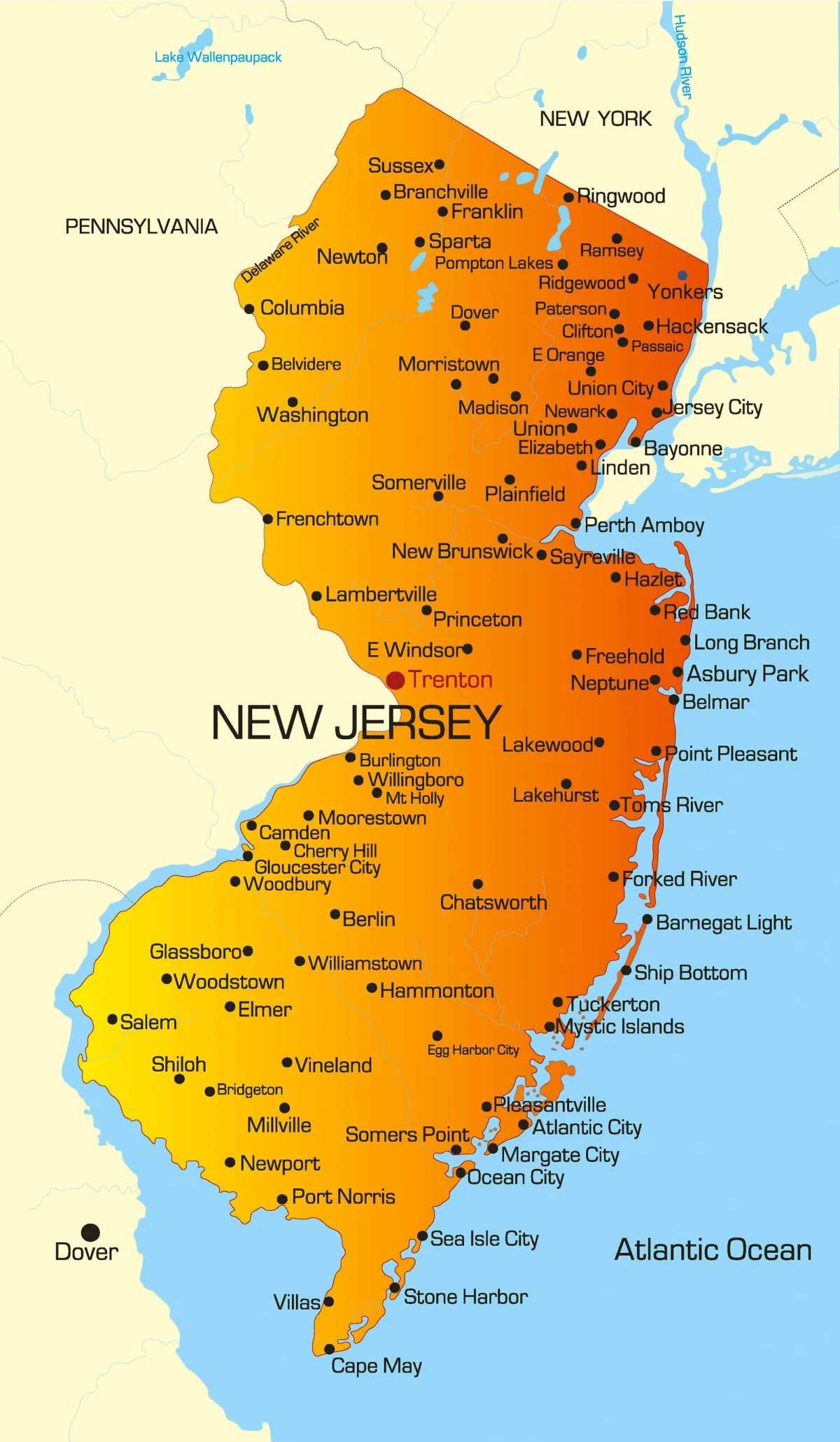 Photo: New Jersey, via www.guideoftheworld.com
The Pretrial Punishment Machine
The human cost of wealth-based detention extends far beyond the courthouse. Even short-term pretrial detention can trigger a cascade of consequences that destabilize lives and communities.
Research by the Prison Policy Initiative found that people held in jail for just three days are 40% more likely to commit new crimes within two years compared to those released immediately. The mechanism isn't mysterious: jail time, even brief periods, disrupts employment, housing, family relationships, and access to social services that provide stability.
Single mothers represent a particularly vulnerable population. A 2019 study by the Pretrial Justice Institute found that women held in jail pending trial were three times more likely to lose custody of their children compared to those released immediately. The financial burden of bail bonds often forces families to choose between a mother's freedom and children's basic needs.
The employment impacts compound over time. The National Employment Law Project documented that even a few days of unexplained absence due to pretrial detention can result in job termination, particularly for hourly workers in at-will employment states. Once unemployed, defendants face additional barriers to making future bail payments, creating cycles of detention that can persist through multiple arrests.
International Perspective: How Other Democracies Handle Pretrial Release
The United States is virtually alone among developed nations in allowing commercial bail bonds. Most countries use judicial assessment of flight risk and danger to the community, with detention reserved for cases where no conditions of release can adequately protect public safety.
Canada abolished commercial bail bonds in 1972, implementing a system where judges consider factors like community ties, employment status, and criminal history in making release decisions. The result: Canada's pretrial detention rate is roughly one-third that of the United States, with no measurable impact on public safety or court appearance rates.
The United Kingdom uses a similar approach, with additional options like electronic monitoring and regular check-ins for defendants deemed higher risk. Even defendants charged with serious offenses are often released pending trial if prosecutors cannot demonstrate specific risks that justify detention.
These systems aren't perfect, but they demonstrate that pretrial justice doesn't require extracting fees from defendants' families. The American model stands out not for its effectiveness, but for its profitability.
The Reform Movement and Industry Pushback
Recent years have seen growing momentum for bail reform, driven by research documenting the failures of cash bail and advocacy from organizations representing both defendants and victims. The movement has achieved notable successes: Washington D.C. releases 85% of defendants without requiring money bail, with 88% appearing for trial and 89% remaining arrest-free pending resolution of their cases.
Similar results have emerged in other jurisdictions that have moved away from cash bail. Kentucky's pretrial reform reduced its jail population by 20% while maintaining court appearance rates above 90%. New Jersey's reforms cut pretrial detention by 44% with no increase in crime rates.
But the bail industry has fought back aggressively, often exploiting isolated incidents of crime by defendants released without bail to argue for restoration of cash requirements. These campaigns deliberately obscure the broader data showing that risk-based release systems perform better than wealth-based detention on virtually every metric.
The industry has also adapted its business model, promoting electronic monitoring and pretrial supervision services that generate revenue even in reformed systems. Some bondsmen have rebranded as "pretrial services providers," seeking government contracts to perform functions that advocates argue should remain in public hands.
The Progressive Case for Abolition
From a progressive perspective, commercial bail bonds represent everything wrong with American criminal justice: a system that criminalizes poverty, extracts profit from human misery, and undermines the presumption of innocence that supposedly anchors our legal system.
The industry's core function is converting constitutional rights into market commodities. The right to pretrial release becomes contingent on ability to pay private companies that contribute nothing to public safety or court efficiency. It's a toll booth on the road to justice, collecting fees from families least able to afford them.
Moreover, the political influence of the bail industry demonstrates how private interests can capture public policy, using lobbying and campaign contributions to maintain profitable arrangements that serve no legitimate public purpose. The industry's opposition to evidence-based reforms reveals its true priority: protecting revenue streams regardless of impact on defendants or communities.
A Vision for Justice Without Extraction
True pretrial justice would eliminate commercial bail bonds entirely, replacing them with robust public defender systems, risk assessment tools, and community-based supervision programs operated by public agencies accountable to democratic oversight.
This means investing in public infrastructure rather than private extraction — hiring social workers instead of bondsmen, funding mental health services instead of jail beds, and treating pretrial release as a public function rather than a private opportunity.
The goal isn't just reforming bail — it's reimagining what justice looks like when it serves people rather than profit.
Until we recognize that freedom shouldn't require a payment plan, American criminal justice will remain a system where your bank account determines your constitutional rights.