The Visa Shell Game: How Silicon Valley Profits from Immigration Rhetoric While Quietly Undercutting American Workers

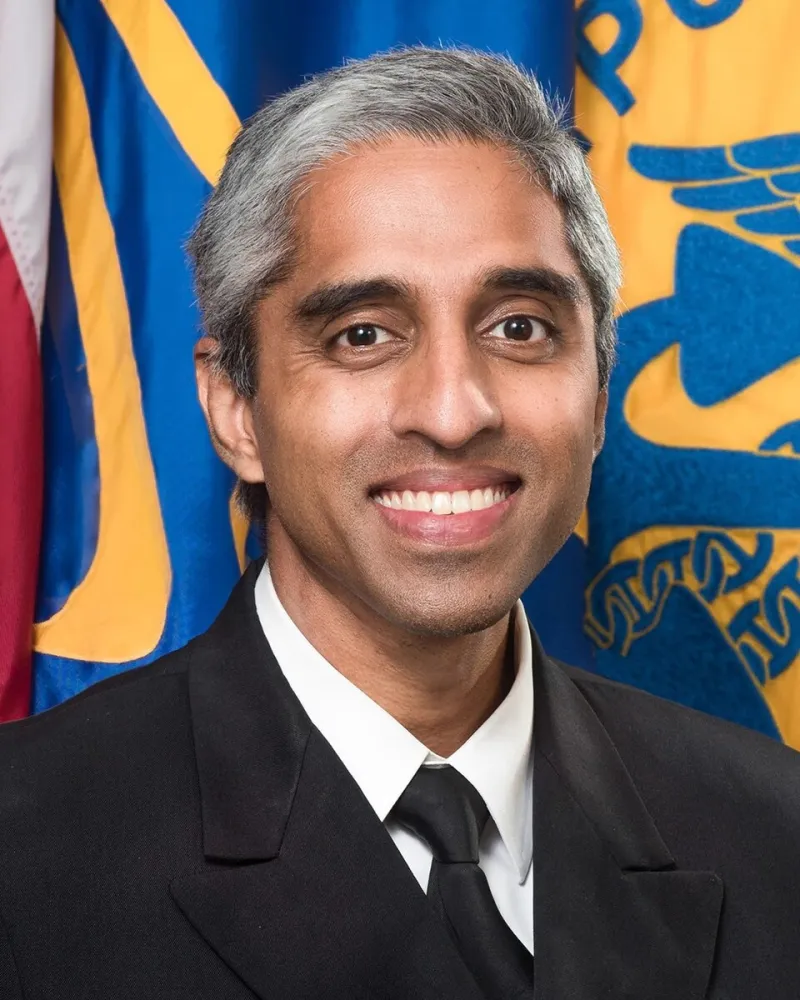
Photo of Bernie Sanders, via Wikimedia Commons
In early 2023, the technology sector laid off more than 200,000 workers in a matter of months. Google, Amazon, Microsoft, Meta, Salesforce — the marquee names of American innovation — conducted mass terminations at a scale that recalled the dot-com collapse of the early 2000s. The stated reasons varied: pandemic-era overhiring, rising interest rates, the need to pivot toward artificial intelligence infrastructure. What received considerably less attention was what happened simultaneously: many of the same companies continued to file thousands of H-1B visa petitions, lobby aggressively for expanded high-skilled immigration, and place laid-off American employees in direct competition with foreign workers whose visa status tied them to a single employer and thus to conditions of structural dependency that no free worker would accept.
This is the visa shell game. And it has been running, with remarkable consistency, for thirty years.
The Mythology of the Skills Shortage
The intellectual foundation of expanded high-skilled immigration rests on a single claim: there are not enough qualified American workers to fill the technology jobs that drive economic growth. This claim is repeated with such frequency and confidence that it has achieved the status of received wisdom. It is also, in any rigorous sense, unproven — and in many specific cases, demonstrably false.
Economist Hal Salzman of Rutgers University, whose research on the STEM labor market spans more than a decade, has consistently found that the United States produces more than enough science, technology, engineering, and mathematics graduates to meet industry demand. The apparent shortage, his work suggests, is better understood as a wage shortage: employers want qualified workers at wages below what a genuinely competitive labor market would produce. Visa programs, by creating a pool of workers whose immigration status is tied to employer sponsorship, provide exactly that — a captive workforce that cannot easily leave, cannot effectively organize, and cannot demand market-rate compensation without risking deportation.
The Economic Policy Institute, analyzing Department of Labor data, has found that H-1B visa holders are frequently paid below the prevailing wage for their occupation and region. The program technically requires employers to pay the prevailing wage, but the definition of "prevailing wage" has been systematically set at the lower end of the wage distribution — meaning a company can satisfy the legal requirement while still paying significantly below what a domestic worker in the same role would command in an open market.
The Displacement Mechanism
The most egregious manifestation of this dynamic involves outsourcing firms — sometimes called body shops — that import H-1B workers in bulk, contract them to major corporations, and use the visa sponsorship relationship as leverage to keep wages suppressed and worker complaints muted. The cases of Disney and Southern California Edison are instructive and well-documented: both companies laid off American IT workers and required them, as a condition of severance, to train their foreign replacements. These were not niche roles or exotic specializations. These were standard IT positions that American workers had performed competently for years.
Congress investigated. Hearings were held. Senators introduced reform legislation. The industry lobbied. The legislation stalled. The practice continued.
This pattern — public outrage, congressional attention, industry mobilization, legislative failure — has repeated itself with such regularity that it is now essentially the expected lifecycle of H-1B reform efforts. The most recent iteration involves the Trump administration's executive actions on visa programs, which generated significant alarm in the technology community and among immigration advocates. Some of that alarm is legitimate: blanket restrictions that prevent genuine international talent from contributing to American science and innovation are counterproductive. But the progressive critique of these programs is not about closing borders. It is about who the current system actually serves.
Class Dynamics in Progressive Clothing
Here is where the politics become genuinely complicated, and where intellectual honesty requires acknowledging the strongest version of the opposing argument. Many sincere progressives — and many immigrant rights advocates whose commitments to human dignity are beyond question — support expanded high-skilled immigration on the grounds that restricting it is xenophobic, economically illiterate, or both. They point, correctly, to the contributions of immigrant scientists, engineers, and entrepreneurs to American innovation. They note, also correctly, that immigration restriction has historically been weaponized by nativist movements with ugly motives.
These are real concerns. They deserve genuine engagement, not dismissal.
But the progressive case for labor rights and the progressive case for immigrant dignity are not in conflict — unless the only immigration reform on offer is the kind that Silicon Valley's lobbyists have written. A visa system that genuinely protected foreign workers — that allowed H-1B holders to change employers freely, that set prevailing wages at the median rather than the floor, that prohibited the outsourcing model entirely — would look nothing like the current program. It would also face fierce opposition from the same technology companies that currently wrap their labor cost management in the language of inclusion and openness.
The class dynamics here are unmistakable. The executives who lobby for unlimited high-skilled immigration are not the ones whose wages are suppressed by it. The engineers and data scientists arriving on H-1B visas are frequently talented, hardworking people who are themselves exploited by a system that treats their legal status as a bargaining chip. The American workers displaced by that system are disproportionately mid-career, often older, and lacking the social capital to navigate the tech industry's informal hiring networks. None of these groups are each other's enemies. All of them are being managed by an industry that has learned to use the language of cosmopolitan progressivism to defend a deeply regressive labor arrangement.
What Reform Would Actually Look Like
A genuinely worker-centered immigration reform would start from different premises than the ones Silicon Valley offers. It would decouple visa status from employer sponsorship, giving foreign workers the same labor market mobility as domestic ones. It would set prevailing wage floors at the true median of the occupation and region, eliminating the wage arbitrage that makes the program attractive to cost-cutting employers. It would cap or eliminate the outsourcing model that allows body shops to import labor in bulk for placement at third-party companies. And it would pair visa expansion with robust enforcement mechanisms — including meaningful penalties for companies that use layoffs to replace domestic workers with cheaper visa-dependent labor.
Such a system would likely enjoy broad support among both domestic workers and the immigrant workers currently trapped in exploitative sponsorship arrangements. It would not enjoy support from the technology industry's government affairs offices, which is perhaps the clearest indication of whose interests the current system actually serves.
The 2024 and 2026 election cycles will feature immigration as a central issue. The progressive movement faces a choice: allow the debate to be defined either by nativist restriction or by corporate-friendly expansion, or insist on a third framework — one grounded in workers' dignity, genuine labor market competition, and an immigration system designed for human beings rather than balance sheets.
The test of any immigration policy is not whether it sounds progressive — it is whether it makes working people, foreign and domestic alike, more free; and by that standard, the current visa system fails everyone who actually does the work.