The Plea Bargain Factory: How America's Justice System Became a Conveyor Belt for Coerced Confessions

The Death of the Trial
In courthouses across America, a constitutional crisis plays out in whispered conversations between defense attorneys and their clients. The numbers tell the story: 97% of federal criminal convictions and 94% of state convictions result from plea bargains, not trials. The Sixth Amendment's guarantee of trial by jury has become a relic, replaced by a system where justice is negotiated in back rooms and innocence becomes a luxury too dangerous to claim.
This isn't an accident. It's the deliberate result of decades of prosecutorial strategy that has turned overcharging from an abuse of power into standard operating procedure. Prosecutors now routinely file multiple charges for single acts, stack penalties to create artificially inflated sentences, and use mandatory minimums as a gun held to defendants' heads. The message is clear: take the deal, or we'll destroy your life.
The Overcharging Machine
Consider the mechanics of modern prosecution. A defendant caught with drugs might face charges for possession, possession with intent to distribute, and conspiracy — each carrying years of potential prison time. Add in sentence enhancements for prior convictions, proximity to schools, or the type of substance, and suddenly a simple possession case becomes a potential life sentence.
The Brennan Center for Justice found that federal prosecutors now charge defendants with an average of 3.2 felonies per case, compared to 1.8 in 1980. This isn't because crimes have become more complex — it's because the law has been weaponized to create maximum leverage in plea negotiations.
 Photo: Brennan Center for Justice, via www.brennancenter.org
Defense attorneys describe the impossible choice they must present to clients: accept a plea deal for 2-5 years, or risk trial and face 20 years to life if convicted. For innocent defendants, this becomes a calculation of survival rather than justice. The Innocence Project estimates that between 2% and 8% of prisoners are innocent — meaning tens of thousands of Americans are serving time for crimes they didn't commit because they couldn't afford to risk trial.
 Photo: Innocence Project, via history.innocenceproject.org
The Poverty Tax on Justice
The plea bargain system doesn't affect all defendants equally. Wealthy defendants can afford experienced attorneys who can challenge prosecutorial overreach and force the state to prove its case. Poor defendants, represented by overworked public defenders carrying caseloads that make meaningful representation impossible, are pushed toward plea deals regardless of guilt or innocence.
Data from the Bureau of Justice Statistics reveals the stark disparity: defendants who can afford private attorneys are twice as likely to have charges dismissed and significantly less likely to receive prison sentences when convicted. Meanwhile, public defender offices report average caseloads of 150 felonies per attorney — far exceeding professional standards that recommend no more than 75.
The result is a two-tiered justice system where constitutional rights are available for purchase. Poor defendants, disproportionately Black and Latino, face a choice between certain punishment through plea bargains and probable destruction through trial.
Mandatory Minimums: The Prosecutor's Nuclear Option
Mandatory minimum sentences have transformed plea negotiations from discussions about appropriate punishment into exercises in prosecutorial coercion. Originally sold as tools to target drug kingpins, these laws now primarily ensnare low-level offenders who become pawns in a system designed to avoid trials entirely.
The Sentencing Commission found that mandatory minimums disproportionately affect defendants of color and those unable to provide substantial assistance to prosecutors. The cruel irony is that major drug dealers — those with information to trade — often receive shorter sentences than street-level users who have nothing to offer but their freedom.
Judges, stripped of discretion by mandatory minimums, become rubber stamps in a system where prosecutors hold all the power. As one federal judge noted, "I am not sentencing you — Congress is sentencing you, and I am merely the deliveryman."
The Human Cost of Efficiency
Proponents of the current system argue that plea bargains are necessary for efficiency — that courts couldn't handle the caseload if everyone demanded trial. This argument reveals the fundamental problem: we have criminalized so much behavior and incarcerated so many people that we can no longer afford to provide them constitutional rights.
The Sixth Amendment doesn't include an efficiency exception. The right to trial exists precisely because the state's power to prosecute is so immense that it requires the check of jury deliberation. When that check is removed, prosecutorial misconduct flourishes in the shadows.
Studies show that jurisdictions with higher plea bargain rates also have higher rates of prosecutorial misconduct, including withholding evidence, making false statements, and pursuing charges without probable cause. Without the threat of trial, prosecutors face no meaningful accountability for abusing their power.
Breaking the Machine
Reforming the plea bargain system requires acknowledging that efficiency cannot come at the cost of constitutional rights. This means limiting prosecutorial charging discretion, eliminating mandatory minimums that serve only to coerce pleas, and funding public defender offices adequately to provide meaningful representation.
Some jurisdictions are experimenting with alternatives. Brooklyn DA Eric Gonzalez has implemented policies requiring prosecutors to justify multiple charges for single acts and has eliminated cash bail for most misdemeanors. Early results show reduced incarceration rates without increases in crime.
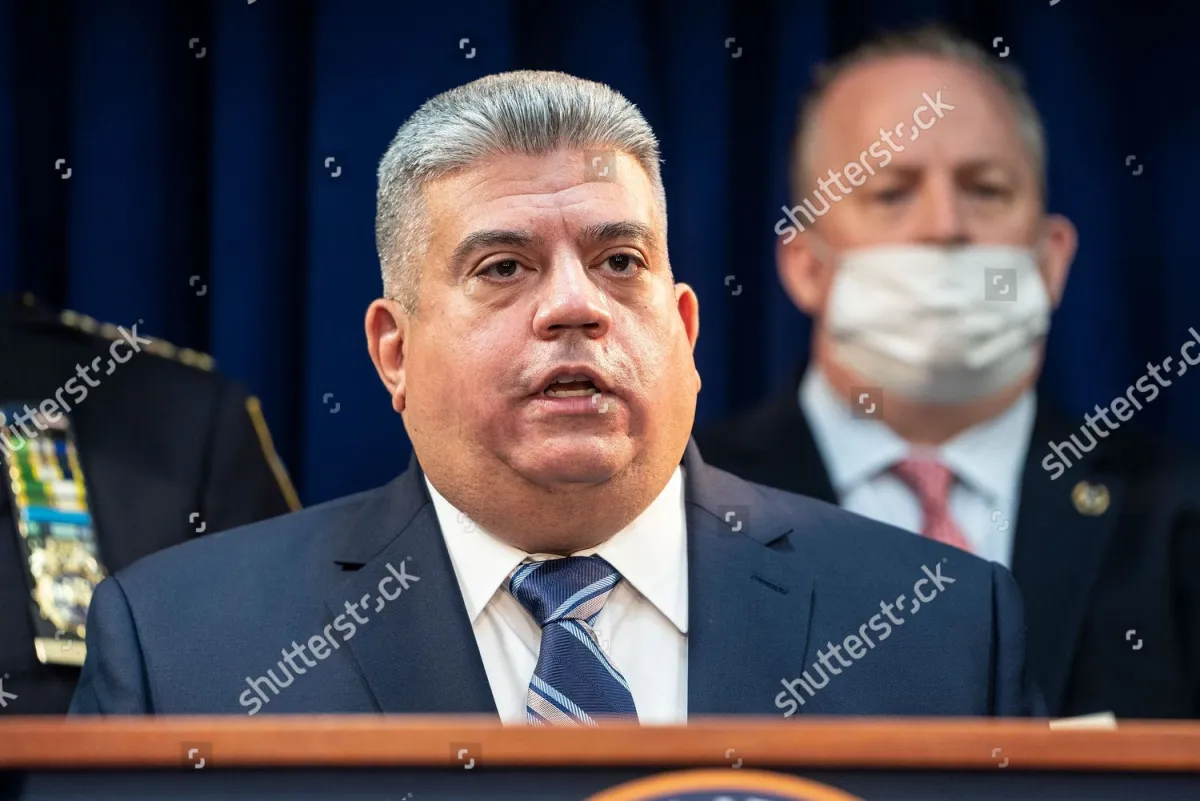 Photo: Eric Gonzalez, via editorial01.shutterstock.com
The path forward requires recognizing that a justice system that processes cases rather than adjudicating them isn't justice at all — it's a bureaucratic machine that criminalizes poverty while calling it law and order.
America's plea bargain factory has turned the courthouse into a assembly line where constitutional rights are stripped away in the name of efficiency, and innocence becomes a gamble too dangerous to take.