The Citizenship Clause Under Siege: What Trump's Birthright Citizenship Fight Really Means for American Identity

The Constitutional Crisis Nobody Saw Coming
On his first day back in office, Donald Trump signed an executive order that legal scholars are calling the most brazen constitutional violation by a president in living memory. The order attempts to end birthright citizenship — the principle that anyone born on U.S. soil automatically becomes an American citizen, regardless of their parents' immigration status.
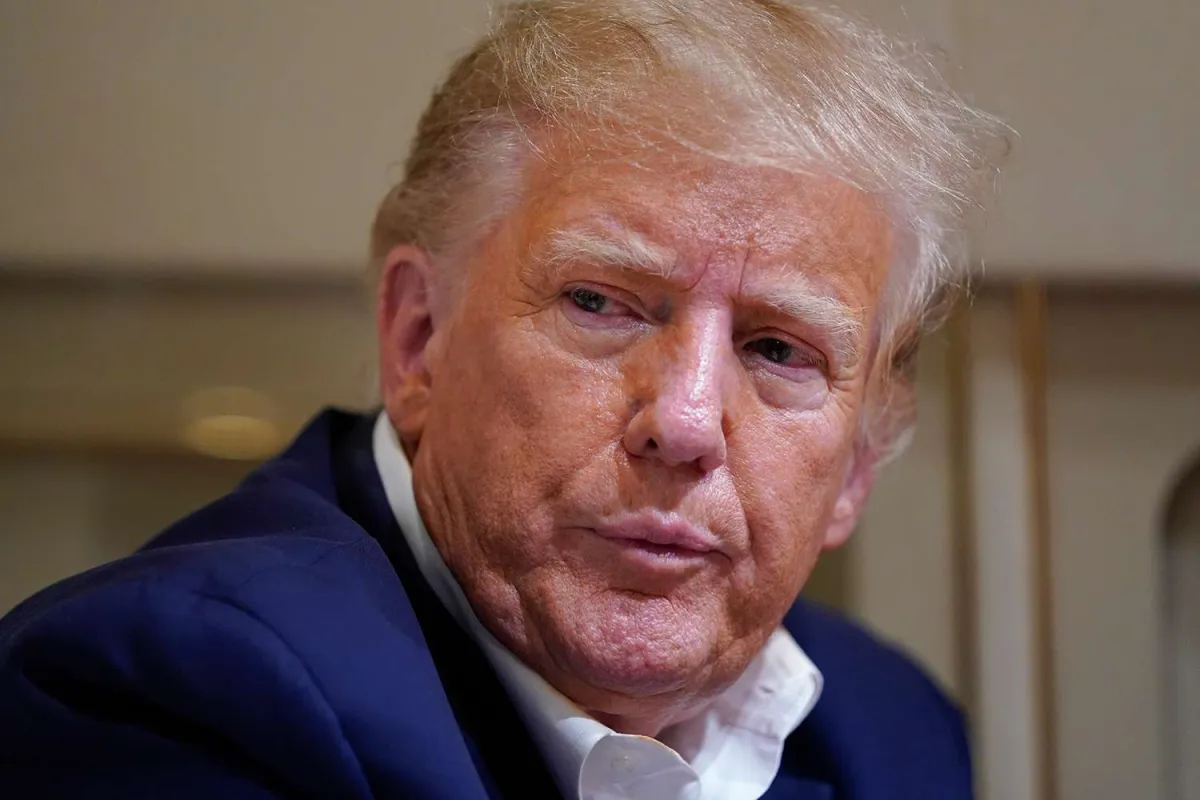 Photo: Donald Trump, via people.com
This isn't a policy tweak or regulatory adjustment. It's a direct assault on the Fourteenth Amendment to the Constitution, ratified in 1868 with language so clear it reads like a legal textbook: "All persons born or naturalized in the United States, and subject to the jurisdiction thereof, are citizens of the United States."
The order has already been blocked by multiple federal courts, setting up what promises to be the defining constitutional battle of the Trump era. But the legal outcome, while important, misses the deeper significance of this moment. Trump's attack on birthright citizenship represents nothing less than an attempt to ethnically redefine American identity — and the historical parallels are chilling.
The Racist Origins of a Constitutional Guarantee
To understand what's at stake, we need to revisit why the Fourteenth Amendment exists in the first place. The citizenship clause wasn't an abstract legal principle — it was a direct response to the Supreme Court's infamous 1857 Dred Scott decision, which declared that Black Americans could never be citizens, no matter where they were born.
The amendment's framers, led by Radical Republicans like Thaddeus Stevens and Charles Sumner, understood that citizenship couldn't be left to the whims of political majorities or the prejudices of individual states. They created birthright citizenship as an unbreachable firewall against exactly the kind of ethnic nationalism that Trump now champions.
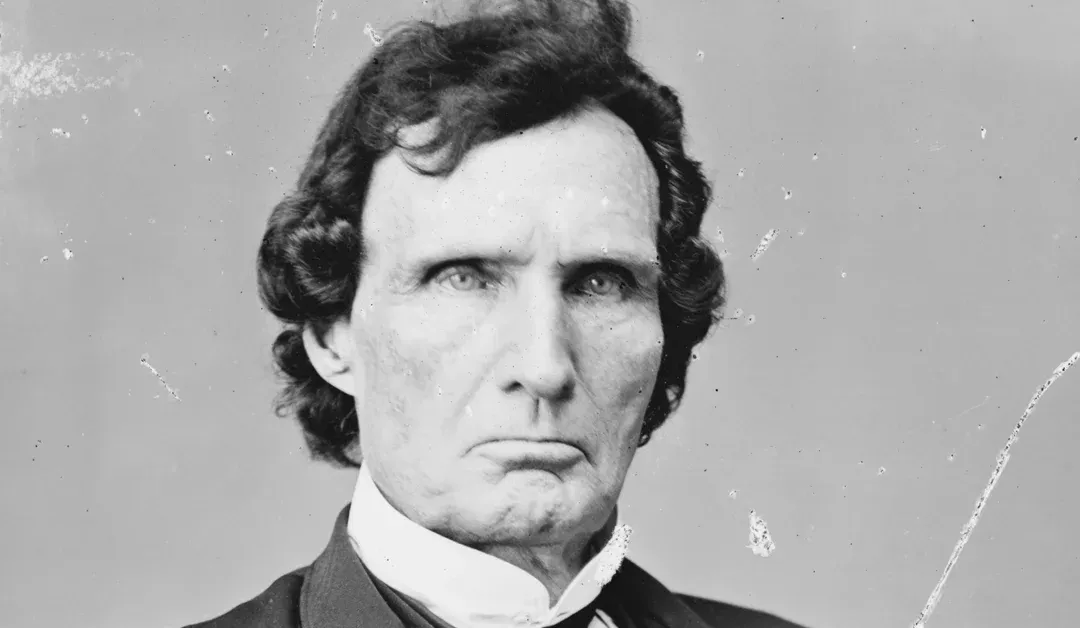 Photo: Thaddeus Stevens, via www.americanhistorycentral.com
The irony is deliberate and ugly. The same constitutional provision designed to prevent the creation of a permanent underclass is now being attacked by politicians seeking to create exactly that — a population of stateless children born on American soil but denied the basic rights of citizenship.
The Human Cost of Constitutional Vandalism
Beyond the legal abstractions lies a human catastrophe in waiting. If Trump's order were to somehow succeed, it would immediately create a class of stateless children — born in America but citizens of nowhere. These children would lack access to basic services, be ineligible for Social Security numbers, and face the constant threat of deportation to countries they've never seen.
The Migration Policy Institute estimates that approximately 150,000 children are born annually to undocumented immigrants. Under Trump's proposed system, these children would join the ranks of the world's 12 million stateless people — individuals who exist in a legal limbo, unable to access education, healthcare, or employment in any country.
The policy would also create an unprecedented bureaucratic nightmare. How would hospitals determine the citizenship status of newborns? Would birth certificates now require immigration documentation from parents? The administrative apparatus needed to implement such a system would make the DMV look like a model of efficiency.
The Legal Pretense
Trump's legal team, led by advisors who've spent years crafting increasingly creative interpretations of constitutional text, hangs their argument on the phrase "subject to the jurisdiction thereof." They claim this language excludes children of undocumented immigrants, arguing that people without legal status aren't fully subject to U.S. jurisdiction.
This interpretation is both historically illiterate and legally absurd. The Supreme Court settled this question in 1898 with United States v. Wong Kim Ark, which explicitly held that children born to non-citizen parents are citizens by birthright. The "jurisdiction" clause refers to people with diplomatic immunity or members of sovereign tribal nations — not undocumented immigrants, who are absolutely subject to U.S. laws and can be prosecuted, taxed, and deported by American authorities.
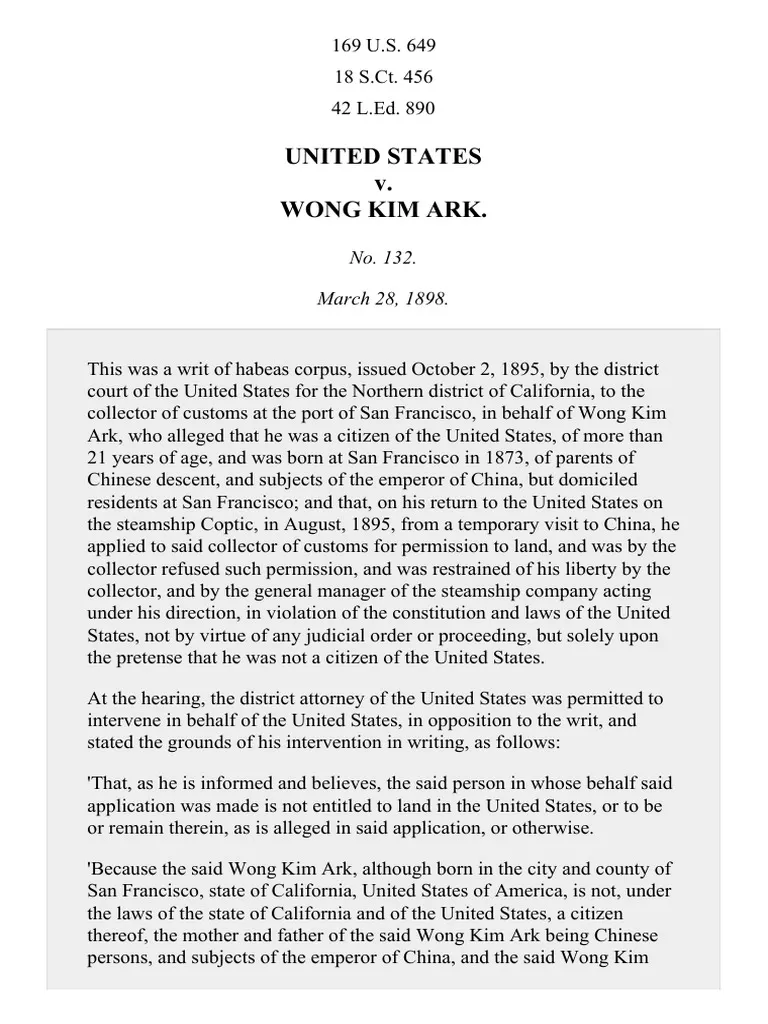 Photo: United States v. Wong Kim Ark, via imgv2-2-f.scribdassets.com
Even conservative legal scholars have rejected Trump's interpretation. Steven Calabresi, co-founder of the Federalist Society, called the executive order "unconstitutional" and noted that changing birthright citizenship would require a constitutional amendment, not executive action.
The Broader Project of Ethnic Nationalism
Trump's attack on birthright citizenship isn't happening in isolation — it's part of a broader project to redefine American identity along ethnic and religious lines. The same administration pursuing this constitutional vandalism has also pledged to end refugee resettlement, reinstate the Muslim travel ban, and conduct mass deportations using military forces.
This represents a fundamental departure from the civic nationalism that has defined America since the founding. Instead of citizenship based on shared democratic values and constitutional principles, Trump offers an ethno-nationalist vision where belonging is determined by ancestry, religion, and race.
The parallels to 1930s Europe are impossible to ignore. The creation of stateless populations was a crucial step in the dehumanization campaigns that preceded genocide. While America in 2025 is not Weimar Germany, the playbook of authoritarian movements remains depressingly consistent: identify a vulnerable population, strip away their legal protections, and normalize their exclusion from the political community.
The Conservative Deflection
Defenders of Trump's order typically fall back on two arguments: that birthright citizenship encourages "anchor babies" and that the U.S. is unusual among developed nations in maintaining such a policy. Both arguments crumble under scrutiny.
The "anchor baby" narrative — the idea that undocumented immigrants deliberately have children in the U.S. to secure legal status — is largely mythical. Under current law, American citizens can't sponsor their parents for legal residency until they turn 21, meaning any supposed "anchor" effect is delayed by decades. Most undocumented immigrants have children because that's what people do, not as part of some elaborate legal strategy.
The international comparison is equally misleading. While it's true that many developed nations have moved away from pure birthright citizenship, they've done so while maintaining robust pathways to citizenship for long-term residents and their children. Trump offers no such alternatives — only the creation of a permanent underclass.
What's Really at Stake
The fight over birthright citizenship will ultimately be decided by federal courts, where Trump's order faces overwhelming legal headwinds. But the broader battle for American identity will continue long after the legal challenges are resolved.
Trump's willingness to attack the Fourteenth Amendment — the constitutional provision that finally made America's promise of equality more than empty rhetoric — reveals the true scope of his authoritarian project. This isn't about immigration policy or border security. It's about whether America will remain a nation defined by democratic ideals or transform into an ethnic homeland for a particular vision of whiteness.
The Fourteenth Amendment's citizenship clause stands as one of the most important democratic innovations in human history — the idea that belonging in a political community should be based on birth and choice, not blood and ancestry. If that principle falls, the America that emerges from its wreckage will be something fundamentally different, and fundamentally darker, than anything the founders envisioned.